I had a crazy idea: take a Mississippi mud roast, shred it, form it into balls, and smash it on the Blackstone like a burger. No ground beef. Just tender chuck roast with smoke, ranch, au jus, butter, and pepperoncinis, cooked again until it develops those crispy, lacy edges.
Then we’re adding thinly sliced onions, melted provolone, toasted buns, and a side of the cooking juices for dipping. It’s part Mississippi pot roast, part smash burger, and part French dip. That’s a mouthful to say, but goodness, it’s a good mouthful to eat.
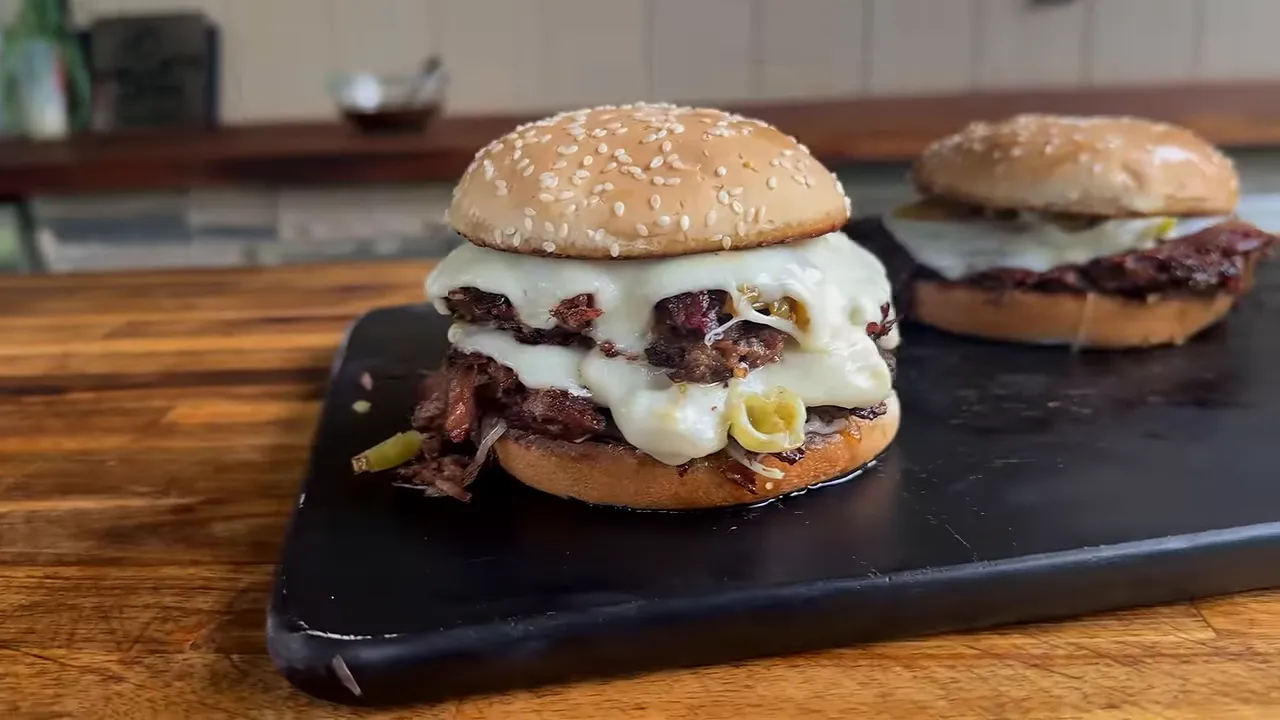
The idea builds on a pulled pork smash burger we tried that turned out phenomenal. Adam and Brett Walton also deserve credit for the inspiration from their Mississippi roast burger variation. My twist was to keep the actual slow-cooked roast at the center of it, add smoke, and find out whether shredded beef could hold together long enough to build a proper griddle crust.
Spoiler alert: it worked.
What You'll Learn
- Smoke the chuck roast for extra flavor, then slow cook it until it shreds easily.
- Work reserved fat into the shredded beef until it compacts into balls without excess liquid.
- Toast buns first, then crisp the patties and serve with skimmed au jus for dipping.
What You’ll Need
This is a cook-by-feel recipe, especially when it comes to adding fat and cooking juices back to the shredded beef. Every chuck roast is a little different, so the texture matters more than an exact spoon count.
For the Mississippi mud roast
- 1 large chuck roast
- Coarse black pepper
- Beef tallow, for the optional sear
- 1 stick of butter
- 1 jar of pepperoncinis, including the liquid
- 1 packet of ranch seasoning
- 1 packet of au jus mix
For the smash burgers
- Shredded Mississippi mud roast
- Reserved fat and cooking juices from the roast
- Hamburger buns
- 1 onion, sliced very thin
- Reserved cooked pepperoncinis, chopped
- Provolone cheese slices
- Mayonnaise or a creamy horseradish sauce, optional
- Reserved au jus, skimmed of excess fat, for dipping
Leave the extra salt in the cabinet to start. Between the ranch packet, au jus mix, and pepperoncinis, there’s plenty of sodium going into this roast. We didn’t add salt, and after tasting the finished burgers, I was glad we didn’t.
1. Season and Smoke the Chuck Roast
Season the chuck roast all over with coarse black pepper. That’s it for the outside seasoning.
I ran the Pit Boss at about 200°F for roughly 4 hours to build smoke flavor before finishing the roast in the Crock-Pot. This is not a four-hour finished roast. The smoker is handling the flavor-building stage; the slow cooker is where we get it tender enough to shred.
Don’t have a smoker? You can skip that step and put the roast straight into the slow cooker with the Mississippi roast ingredients. The smoke adds another layer, but it isn’t required to make the burger.
The optional extra step: sear it
After smoking, I heated beef tallow in a cast iron skillet and seared the roast on its broad surfaces and edges.
Was that necessary? Probably not. I had time, and I wanted to push the flavor a little further. Consider it an optional step rather than something that needs to stand between you and dinner.
2. Slow Cook Until the Beef Shreds Easily
Add the butter, the whole jar of pepperoncinis with its liquid, ranch seasoning, and au jus mix to the Crock-Pot. Add the roast, along with the skillet drippings if you seared it.
Cover and cook until the beef is tender enough to pull apart easily. Tenderness is the finish line here, not the earlier four-hour smoking time.
Once it’s tender, carefully transfer the roast to a rimmed sheet pan. Save everything left in that slow cooker. That liquid is gold, and we’re going to use both the fat and the juices.
3. Separate the Beef, Peppers, Fat, and Au Jus
Pour the cooking liquid into a heat-safe container and remove the pepperoncinis. Set the peppers aside for the burger toppings.
Refrigerate the cooking liquid so the fat can rise and separate while you work on the beef. The goal is to give yourself two useful ingredients:
- The reserved fat: to enrich the shredded beef, help it compact into portions, and grease the griddle.
- The flavorful juices: to add a little moisture to the beef and serve as the French dip-style au jus.
Shred the roast thoroughly on the sheet pan, breaking up the larger pieces and tossing the meat as you go so it cools enough to handle.
My roast looked fairly lean once shredded. Yours might have more fat running through it, which is why this next part needs a little judgment.
4. Add Back Enough Fat to Form Beef Balls
Skim some fat from the top of the reserved cooking liquid and work it into the shredded beef. Add it gradually, mixing well between additions.
A little juice coming along with the fat is fine. That’s flavor. What you don’t want is a pan of soaking-wet beef that has to steam off a bunch of liquid before it can crisp.
I also mixed in a couple of spoonfuls of the combined fat and juices for flavor and moisture. Then I squeezed a handful together to see whether it would hold its shape.
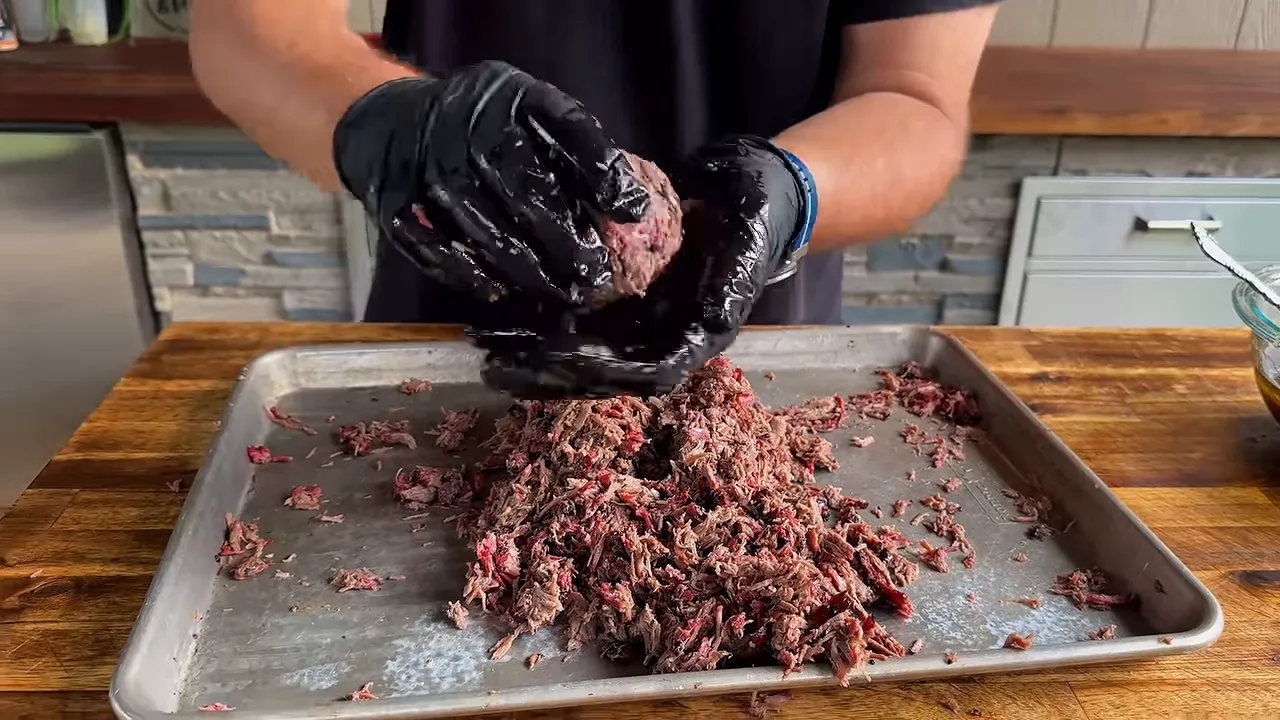
You’re looking for beef that feels moist and packs together. If it’s dry and loose, work in a little more reserved fat and test another handful.
Form the mixture into balls, eyeballing the portions. The smash burger police aren’t coming to your house over a slightly bigger or smaller burger. That said, this isn’t necessarily the place for the thinnest patty you’ve ever made. Leaving a little body gives the shredded beef a better chance of staying together.
I spooned a small amount of the mixed cooking juices over the formed balls, too, just enough to trickle into the nooks and crannies. Not a soaking.
One of my portions started coming apart before it even reached the griddle, so don’t expect these to handle exactly like raw ground beef. Compact them carefully and treat them gently.
5. Prep the Toppings and Toast the Buns First
Slice the onion very thin, like you would for an Oklahoma onion burger. Chop the reserved cooked pepperoncinis into pieces that will sit nicely on top of the patties.
Get the griddle preheated. I started the Blackstone on low, but the cooking surface was around the 450°F range by the time the beef went down. Knob position and actual surface temperature aren’t the same thing, so pay attention to how your griddle is heating.
Spoon a little reserved beef fat onto the surface and toast the cut sides of the buns. If some au jus comes along with the fat, it will sputter as that moisture cooks away.
Get the buns finished before starting the patties. The beef is already cooked, and this griddle stage moves quickly. You want to concentrate on building the crust and making a clean flip, not scrambling to finish your bread.
6. Smash the Pulled Beef on the Blackstone
- Lightly grease the cooking area. Use reserved beef fat or beef tallow.
- Set down the beef balls. Leave enough room to flatten them and slide a spatula underneath.
- Smash with parchment and a burger press. Press into patties while keeping enough thickness for the shredded meat to hold together.
- Add only a little cooking juice if needed. I spooned a small amount over the patties, keeping the focus on crisping rather than steaming.
- Add the thin onions. For the onion-style version, pile them on top before flipping.
- Let a crust develop. Give the beef time to brown before trying to move it.
I didn’t smash the onions down into these patties the way I might with a traditional Oklahoma onion burger. The beef was already cooked, so I let it start crisping, added the onions on top, and flipped the patties onto the onions.
Use a sturdy spatula to get underneath the crust and lift the whole patty. That browned underside is what you worked for. Don’t leave it stuck to the griddle.
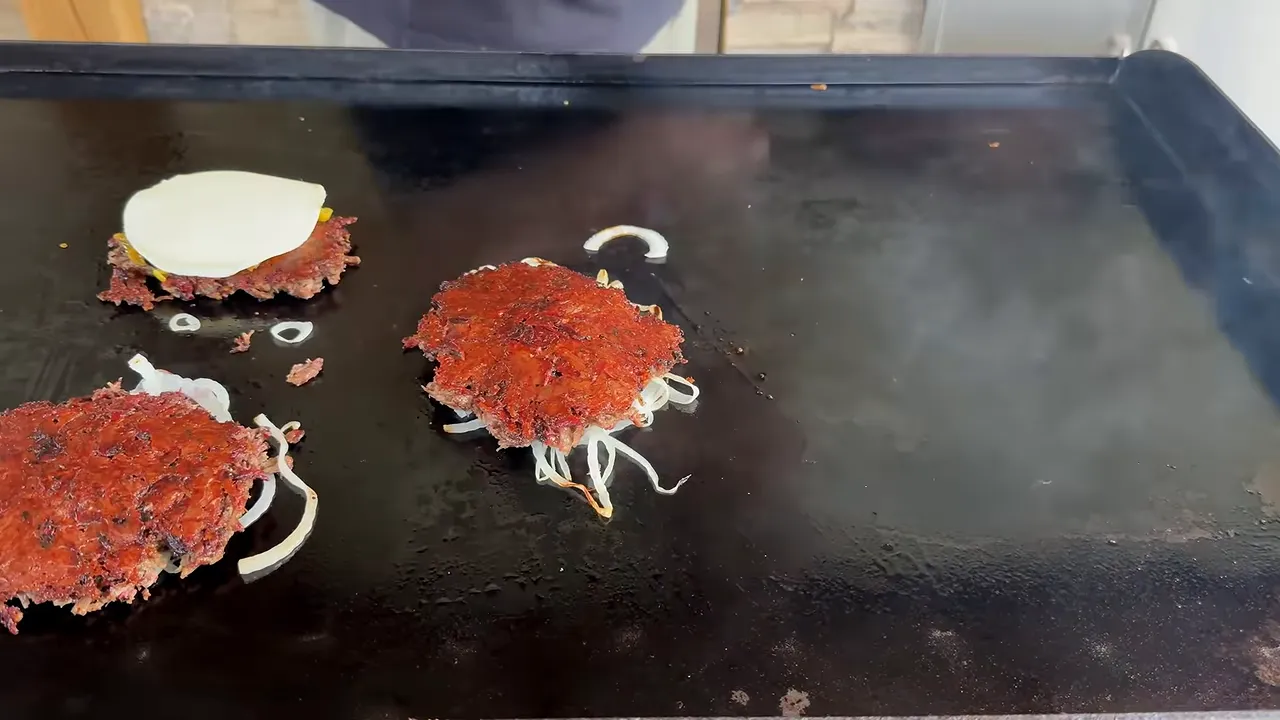
That was the moment I knew we had something. Three patties down, three successful flips, and a beautiful crust on every one.
7. Add Pepperoncinis, Provolone, and Sauce
Top the flipped patties with chopped pepperoncinis and provolone. I used two slices of cheese on the single patty and added extra peppers to that one, too. Cover with a melting dome as needed to finish melting the cheese.
Don’t be shy with the pepperoncinis if you like them. They bring a tangy, slightly spicy bite that works beautifully with the rich beef and cheese.
For the buns, we tried two creamy options:
- Mayonnaise: a welcome layer of moisture against the crisp beef and toasted bread.
- Creamy horseradish sauce: that classic beef-and-horseradish combination, with a little extra kick.
I talked about Arby’s sauce and horseradish while putting these together, and the creamy horsey sauce worked really well on the single. My wife wanted mayonnaise on hers, and she was right about that, too.
You can build a single or stack two patties for a double. Just know that the double gets big in a hurry. If that’s your plan, make the individual beef portions a little smaller than you might think you need.
8. Serve French Dip Style
Skim excess fat from the reserved au jus, warm it for serving, and put it in a small bowl alongside the burgers.
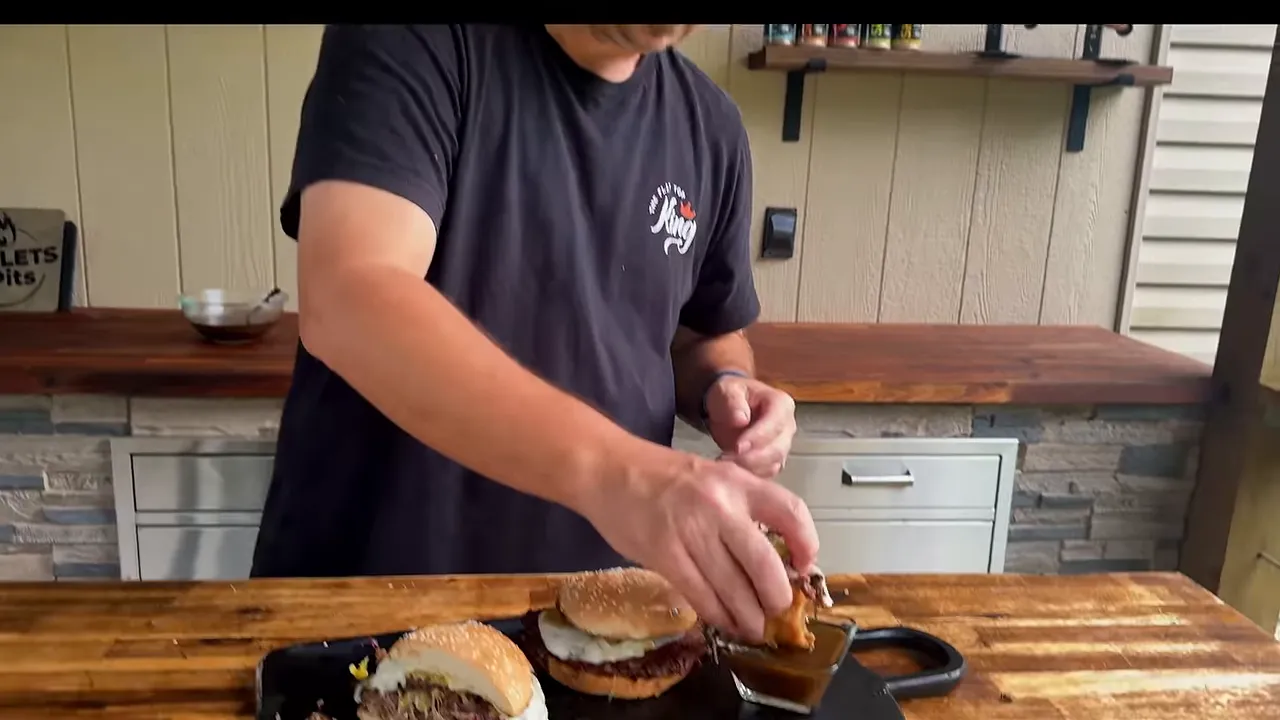
The burger is excellent on its own, but that dip takes it another step. You get the smoke, the richness of the roast, the crispy edges, melted cheese, and then all that concentrated Mississippi roast flavor from the juices.
Interestingly, it looks like a burger but eats a little more like a cheesesteak. That makes sense once you bite into the shredded beef, onions, and provolone. It’s familiar enough to understand immediately, but different enough to make you stop and think about the next bite.
Don’t Waste the Leftover Au Jus
If you have more cooking liquid than you need, save it. Refrigerate it promptly, let the fat separate, and skim it before portioning.
You can freeze it in an ice cube tray for small amounts or save it in half-cup or one-cup portions. Frozen portions can also be vacuum sealed for later. For safe cooling and storage, follow the USDA’s leftover food safety guidance.
The biggest lesson from this cook is simple: keep the fat, control the moisture, and give the beef time to build a crust. That’s what turns a pile of tender Mississippi pot roast into a smash burger worth getting excited about.
Add the mayo or horsey sauce, keep that au jus close, and don’t worry about whether it fits neatly into the burger category. This thing is a home run.


