I’ve always been a big-griddle guy. Give me the extra cooking room, and I’ll find a way to use it. But a trip to the Daytona 500 changed how I think about portable griddles.
Big Horn invited me down to film some content, and walking through the infield turned into an education. I talked with people camping in everything from trailers to big RVs. Some pulled their griddle out three or four times a year. Others traveled constantly and cooked on theirs all the time.
And these folks weren’t just making burgers and hot dogs. They were proud of full meals, inviting us over for breakfast and talking about food that sounded downright restaurant-worthy. Steaks, potatoes, the whole deal. They did not hold back.
So, which travel griddle makes sense for you? I’ve cooked on three 22-inch models: the Blackstone Adventure Ready, Weber Traveler, and Solo stainless steel griddle. Each has real advantages, and each asks you to give something up. The right choice depends less on a brand name and more on how you actually plan to cook, clean, and travel.
Table of Contents
- Quick Summary
- The Three Portable Griddles and Their Price Points
- Cooking Surfaces: Stainless Steel vs. Seasoned Steel
- Heat Control: Low Heat Matters More Than You Might Think
- Two Burners vs. One: Useful, but Not a Dealbreaker
- Wind Performance Matters at a Campsite
- Lids: Removable Covers Are Not All Cooking Domes
- Grease Traps: A Small Detail That Can Get Messy
- Leveling Feet: Weber Has a Real Camping Advantage
- Portability: Weight Deserves More Attention
- Propane Connections
- Which Portable Griddle Would I Choose?
- Buy for Your Trips, Not Somebody Else’s Backyard
Quick Summary
- The Blackstone offers the lowest comparison price and least weight, but needs seasoning care and heat management.
- The Weber combines sturdy construction and adjustable feet, but is the heaviest unit tested.
- The Solo delivered the best low-heat control and most even heating, with a washable stainless plate.
- The Weber tested was an older Traveler, not the newer rust-resistant Slate version.
The Three Portable Griddles and Their Price Points
Here are the approximate prices I referenced when comparing these units:
- Blackstone 22-inch Adventure Ready: $199.
- Weber 22-inch Traveler: $299.
- Solo 22-inch stainless steel griddle: $399.
Those are comparison prices, not a promise of today’s checkout total. Sales, discounts, and model changes can move things around.
There is also an important distinction with the Weber: the Traveler I cooked on is not the newer Slate version. Weber now offers a 22-inch Slate with a rust-resistant cooking surface, but my cooking observations here come from the older unit shown. Don’t mix those two up when shopping.
At these price points, you’re weighing more than cooking space. Surface material, heat control, weight, leveling, and cleanup all become part of the value.
Cooking Surfaces: Stainless Steel vs. Seasoned Steel
Solo: The Stainless Steel Option
The Solo stands out immediately because of its stainless steel cooking plate. It’s a heavy-duty, three-ply surface, and the plate lifts out of the base.
That removable plate is a big convenience. You can take it inside to wash rather than handling every bit of cleanup on the cooking station. Treat it as stainless steel, using suitable cleaners and non-damaging cleaning tools in line with the manufacturer’s care instructions. Bar Keepers Friend is one stainless cleaner I mentioned as an option.
The appeal is simple: you’re not maintaining a traditional seasoning layer the way you are with rolled steel. Stainless offers a substantial rust-resistance advantage, though I’d still clean it and dry it thoroughly rather than treat any outdoor cooking surface as maintenance-free.
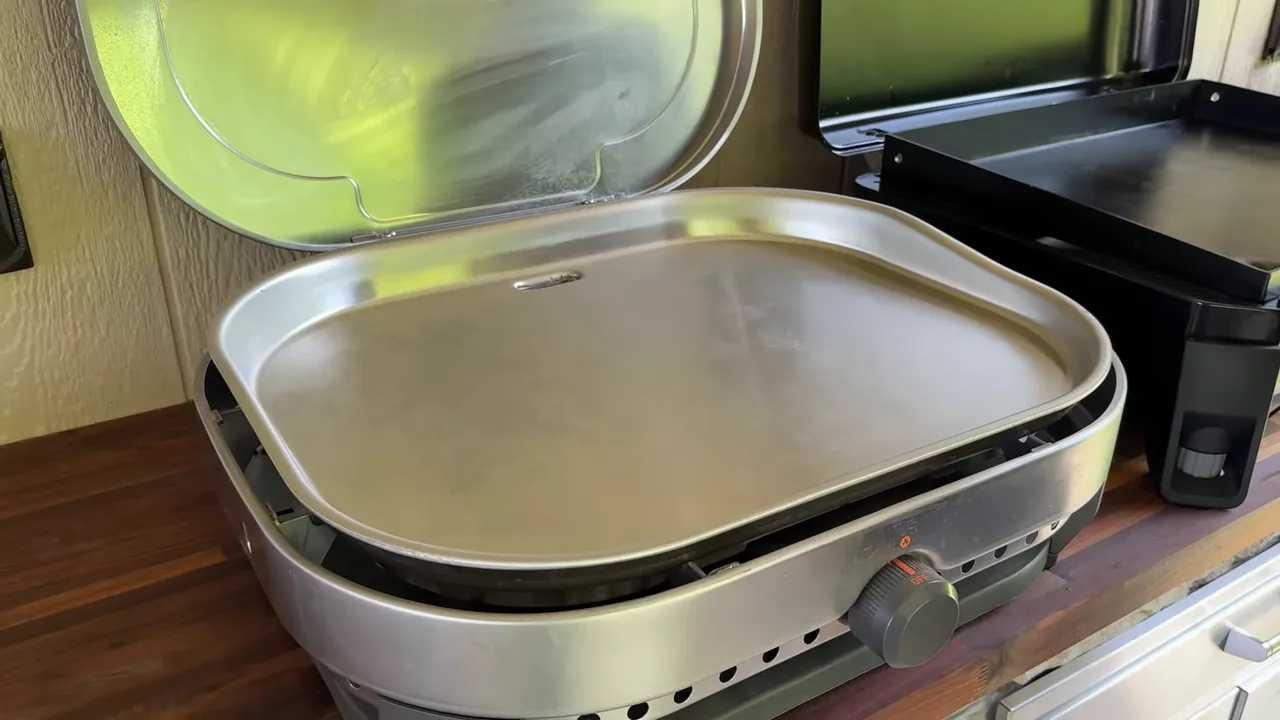
Is $399 a lot for a portable griddle? Absolutely. I understand that reaction. But stainless steel costs more, and I think this unit offers good value compared with other higher-end stainless options. Whether that value matters to you depends on your budget and how much you appreciate the surface and cleanup benefits.
Weber: Pay Attention to Which Version You’re Buying
My older Weber has seen plenty of use, and its surface has held up well overall. There were a couple of small spots developing, but nothing that changed my overall impression of how it had handled regular use and maintenance.
The newer Slate surface adds rust resistance, which can be appealing for a griddle that spends time stored between trips. Just remember that rust-resistant does not mean you can forget cleaning and care.
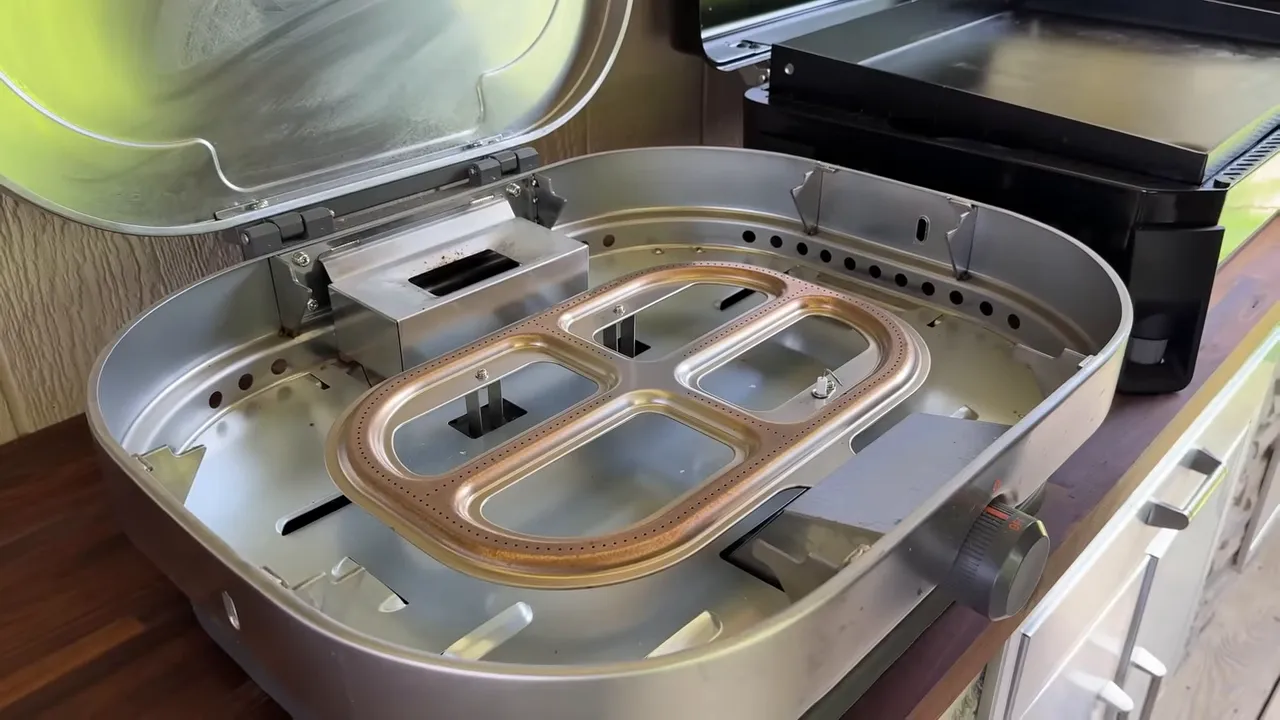
The Weber cooking plate is removable, too. Underneath, its burner layout is quite different from the Solo’s single racetrack-style burner.
Blackstone: Rolled Steel That Needs Seasoning
The Blackstone has a traditional rolled-steel cooking surface. Keep up with cleaning, drying, and oiling, and it can serve you well. Neglect that maintenance, and rust can become a project you have to deal with before the next meal.
That isn’t a knock on Blackstone specifically. It’s a consideration with this type of steel surface regardless of whose name is on the front.
My Blackstone had been sitting in the garage since its previous use, and I hadn’t dressed it up for this comparison. It still looked good, without visible rust. Storage conditions and maintenance matter.
One handy feature of a small removable plate is the possibility of seasoning it in an oven. I’ve done that with this Blackstone plate, and I like how well oven seasoning works. If you’re considering it, make sure the plate fits safely and that the process is appropriate under your model’s instructions.
Heat Control: Low Heat Matters More Than You Might Think
One of the first things I care about on any griddle is how it handles heat, especially how well it stays low.
For camping breakfasts and tailgating, I don’t want a griddle that races past a useful cooking temperature while I’m getting ingredients ready or talking with the people around me. I want a low setting that gives me manageable heat. That’s not an invitation to leave a lit griddle unattended. It’s about having a cooking surface that doesn’t constantly fight you.
Solo Had the Best Low Heat and Most Even Heating
Of these three units, the Solo did the best job staying at a lower cooking temperature in my experience. It also gave me the most even heat.
Its racetrack-style burner layout helps spread heat beneath the plate. Combined with the cooking surface, that makes it the strongest of these three for the kind of controlled, even cooking I prefer.
Weber Had a Pronounced Hot Spot
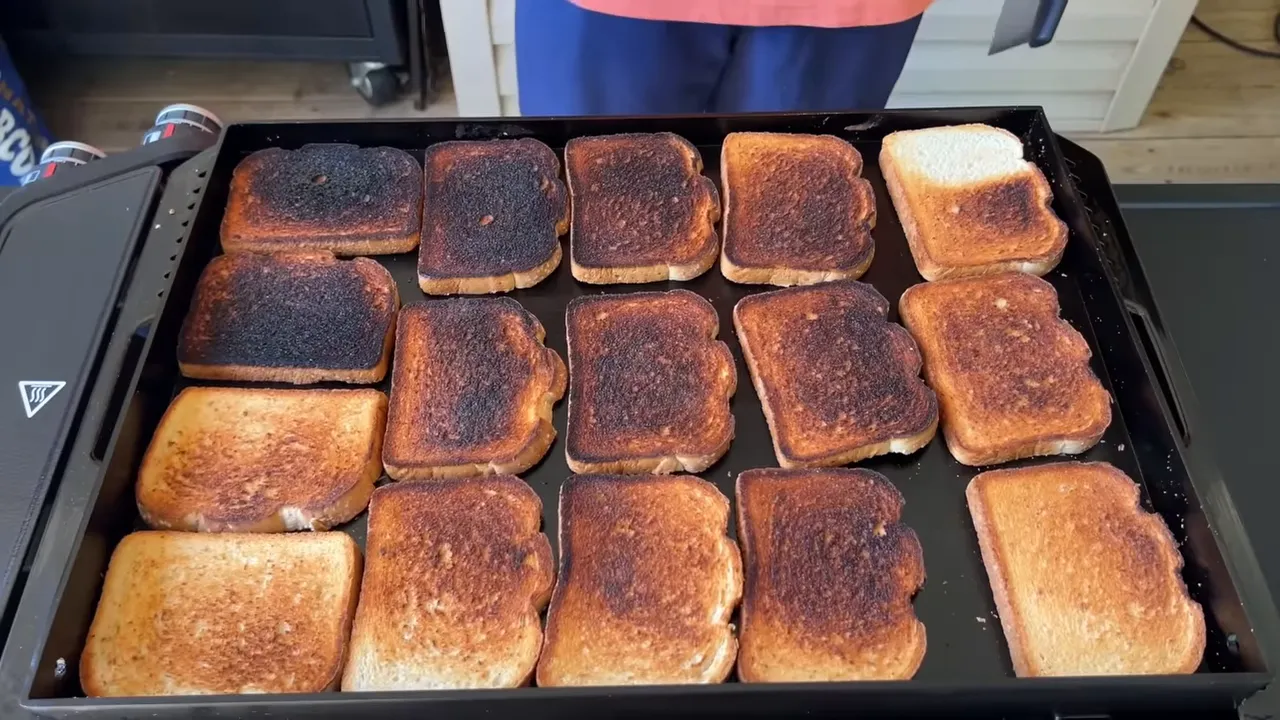
The Weber I tested had an area that ran noticeably hotter than the rest of the plate, with heat tapering away and a cooler area elsewhere.
You can cook around that once you know where it is. But I would not describe this particular unit as one of the most evenly heating griddles I’ve used.
Breakfast makes that difference obvious. Toast spread across a plate can reveal which areas are browning quickly and which are lagging behind. If consistent heat across the whole surface is high on your list, that deserves attention.
Blackstone Requires Learning Its Hot Spots
The Blackstone can build heat in a hurry, and I wouldn’t call its heating perfectly even either. This is one of those griddles where you need to learn your edges, your hotter areas, and where to move food as it cooks.
For the price, some people are perfectly happy with that. They get familiar with the surface and get on with cooking. Others would rather spend more for a more even experience. Neither approach is wrong.
Two Burners vs. One: Useful, but Not a Dealbreaker
The Blackstone and Weber each have two independently controlled burners. The Solo has one burner.
I’d like to see two burners on the 22-inch Solo. Independent controls give you options:
- Run one burner higher and the other lower.
- Turn one burner off when you only need part of the plate.
- Use a less directly heated area to hold food while something else finishes.
But here’s the reality: these are small cooking plates. Heat spreads through the steel, so two knobs do not automatically give you two completely separate temperature zones.
I wouldn’t expect a crisp 500°F zone right beside a 320°F zone on either of these two-burner units. There is too much heat transfer across a compact surface. Two burners are a benefit, but the Solo’s single burner isn’t automatically a dealbreaker, especially given how evenly it cooked for me.
Wind Performance Matters at a Campsite
The Blackstone has shielding at the front, but the sides are more exposed. Of these three griddles, it was the one that gave me wind-related trouble, even on my back porch.
That matters when you’re buying a camping griddle. You don’t always get to pick a perfectly sheltered spot.
I know people use aftermarket wind guards or improvise with metal scrapers placed beside the cooking plate. I’m cautious about recommending homemade solutions because I don’t know how each change affects ventilation and heat buildup.
Don’t block the openings around a gas appliance without checking the manufacturer’s guidance. Trapping heat or interfering with airflow can create a bigger problem than the wind you’re trying to solve. For broader outdoor cooking precautions, the NFPA’s grilling safety guidance is a useful reference.
Lids: Removable Covers Are Not All Cooking Domes
The lid designs are different, and that can affect both setup and cooking:
- Blackstone: The cover has supports that let it hang off the back, or you can remove it completely.
- Weber: The lid is hinged, though it can be removed by undoing its fasteners.
- Solo: The lid is also hinged and removable.
The important part is knowing whether the lid is intended to be closed during cooking.
The Weber’s warning label says the top cover must remain open while the burners are operating. So, no, I would not use that cover as a melting dome. Being able to remove a lid doesn’t change its operating restrictions.
The Solo offers more flexibility for limited lid-down cooking under its instructions. On a creekside breakfast cook, I briefly lowered the lid over potatoes and onions with the burner on low to help heat build around the food. Once things got going, I opened it again.
That can be useful for melting cheese or helping vegetables along, but it does not mean shutting the lid over high heat for an extended period. Follow the limits for the exact model you own.
Grease Traps: A Small Detail That Can Get Messy
All three units have removable grease traps, but their shape and placement are worth considering.
Blackstone: My Preferred Grease-Trap Design
The Blackstone collects grease at the rear in a full-size, deeper cup. Amen to that, because we need somewhere for the grease and cleanup liquid to go.
I prefer that deeper shape. It keeps the contents lower in the container rather than spread across a shallow pan, which helps when you’re carefully carrying it away to empty.
Weber: Convenient Front Access, Shallower Pan
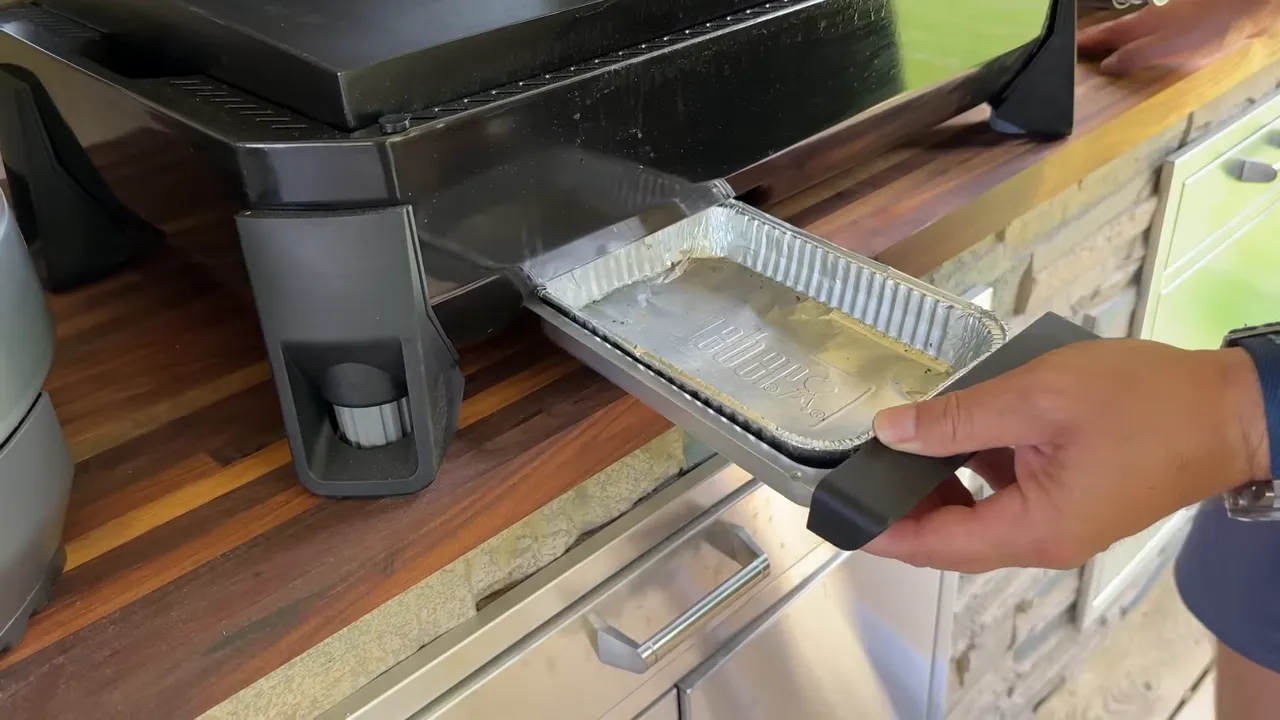
The Weber’s grease tray pulls out from the front. Access is easy, and its capacity looked reasonably comparable to me, though I didn’t measure it.
My complaint is the shallower shape. Grease, water, and food debris can slosh around more as you move it. I’d rather have a deeper container.
Solo: Keep an Eye on the Smaller Cup
The Solo appears to have the smallest grease cup of the three, and that is one of my least favorite features on it.
If you’re scraping a lot of debris toward the drain or using water during cleanup, pay attention to how full that cup is getting. You may need to empty it during the process. A great cooking surface doesn’t make a small grease cup any bigger.
Leveling Feet: Weber Has a Real Camping Advantage
Of the three models I compared, only the Weber has adjustable leveling feet. The Solo and Blackstone do not.
We used that adjustment on our camping trip. Different setup spots needed different corrections, and being able to adjust the griddle itself was genuinely useful.
Does that mean the other two won’t work at a campground? Of course not. Blackstones were everywhere in the Daytona infield. People found a way to set up, whether that meant leveling their table or making another suitable adjustment to the cooking station.
Still, built-in leveling is a nice feature. It’s something I’d put on the list, even if it wouldn’t decide the purchase by itself.
Portability: Weight Deserves More Attention
My wife made a good point when we were discussing these griddles: it’s easy to explain what another $100 buys you, but what do you gain by spending less?
With the Blackstone, one answer is less weight to lift.
The weights shown during the comparison were:
- Blackstone: 30.80 pounds.
- Solo: 38.70 pounds.
- Weber: 53.46 pounds.
I initially described the Blackstone and Solo as feeling fairly close while handling them. The Weber, though, was clearly the heaviest. Its base and cooking plate feel substantial, and I give it credit for that beefy construction.
But substantial construction has to go into the truck, then come out of the truck, then go back in again. When we went camping, repeatedly loading and unloading equipment was work. A lighter griddle can be a real advantage, not just a compromise.
All three have removable cooking plates, so you can move the cooled plate and base separately if handling the complete unit is too awkward. The plate accounts for a large share of the weight. On the Blackstone, the top sits securely in its mounting points and takes a little lift-and-shift motion to release rather than simply sliding around.
None of these is featherweight. Think about who will lift it and how often before deciding that the heaviest option must be the best one.
Propane Connections
All three can connect to a 20-pound propane tank with the correct adapter.
That’s useful for an RV setup or longer camping trip, but the words “correct adapter” matter. Use a connection setup approved for your particular griddle rather than assuming every hose and regulator arrangement is interchangeable.
Which Portable Griddle Would I Choose?
I don’t think there’s one right answer for everybody. Here’s how I’d match these griddles to different priorities.
Choose Blackstone for Lower Cost and Easier Lifting
The Blackstone Adventure Ready makes sense if you want the lowest entry price here, two burners, a deeper rear grease cup, and less weight to load.
The tradeoffs are maintaining a seasoned rolled-steel plate, learning the heat pattern, dealing with wind sensitivity, and leveling the setup without adjustable feet. If those things don’t bother you, there’s a practical argument for keeping the extra money in your pocket.
Choose Weber for Sturdy Construction and Leveling
The Weber stands out for its solid build, two burners, and adjustable feet. Those leveling adjustments earned their keep during our camping trip.
The big drawback is weight. The older Traveler I tested also had a pronounced hot spot and a shallow grease tray. If the newer rust-resistant Slate surface is part of your buying decision, make sure you’re comparing that exact version rather than assuming my older unit has it.
Choose Solo for Stainless Steel and Controlled, Even Heat
The Solo would be my pick of these three if my main priorities were low-heat control, even cooking, and a removable stainless steel surface that’s straightforward to wash.
You pay the most of the three comparison prices, and you give up independent burner controls and adjustable feet. You also get the smallest grease cup. Those are real drawbacks, even though I like the way it cooks.
Buy for Your Trips, Not Somebody Else’s Backyard
I used to hear, “It’s just me and my wife. Do we really need anything bigger than a 22-inch griddle?” and immediately start thinking about why they should go bigger.
Daytona put me in my place a little bit. Bigger is useful for the way I often cook, but that doesn’t make it the right answer for everyone else.
Before buying, decide what matters most: your budget, how often you travel, how much weight you want to handle, how much surface maintenance you’re willing to do, and how particular you are about heat control.
The best portable griddle is the one that fits the way you actually use it. And don’t sell a small griddle short. The people cooking full meals in that infield made one thing clear: a travel griddle doesn’t have to mean settling for travel food.


