A sticky griddle, brown streaks behind your spatula, light-colored edges: none of those automatically mean you ruined your flat top. Most seasoning problems come back to a few things: the oil you chose, how much you applied, the temperature of the steel, and whether you gave each layer enough time.
I get seasoning questions more than just about any other griddle question. The tough part is figuring out what happened without knowing the process that got you there. A dark patch alone doesn't tell the whole story.
After seasoning a bunch of different griddles, here's what I've learned: more oil isn't better, maximum heat isn't always necessary, and rushing is usually what gets you in trouble.
Table of Contents
- Key Takeaways
- 1. Skipping the Cleaning Before You Season
- 2. Choosing the Wrong Oil for the Initial Seasoning
- 3. Assuming the Whole Griddle Is Hot Enough
- 4. Adding Another Layer Before the Previous One Is Ready
- 5. Using Too Much Oil and Too Much Heat
- How to Fix Sticky or Uneven Griddle Seasoning
- Use Tools That Keep Your Hands Away From the Heat
- What to Cook First After Seasoning Your Griddle
Key Takeaways
- Use extremely thin oil layers and let each one cure before adding another.
- Check actual surface temperatures because the center, edges, and corners heat differently.
- Sticky seasoning can come from excess oil, rushed layers, or both.
- Early cooks with oiled vegetables help develop the surface and reveal its cooking behavior.
1. Skipping the Cleaning Before You Season
Before you worry about which oil to buy, clean the griddle. On a brand-new Blackstone, that means starting with soapy water, then rinsing and drying the surface before seasoning.
I also like to wash and add seasoning to a preseasoned cooking surface, much like I would with a new cast iron skillet. A factory-seasoned top doesn't change my preference for starting with a clean surface and building on that foundation.
There is an important exception here: this advice is for griddle tops that require seasoning, not ceramic-coated cooking surfaces. The Pit Boss Ultimate, for example, has a ceramic-coated top and doesn't belong in this same seasoning conversation. Follow the care instructions for your particular surface.
Seasoning is protection first
People tend to think seasoning is all about making food slide around. A well-developed seasoning does help create a less-stick cooking surface, but its first job is protecting the metal.
That changes how you approach the process. You're not trying to leave a slick puddle of cooking oil on top. You're trying to build a durable protective layer.
And don't let old cast iron rules scare you away from cleaning. The idea that soap can never touch seasoned cookware isn't a rule you need to carry over blindly. For supporting care guidance, Lodge's cast iron cleaning instructions also allow a small amount of soap.
2. Choosing the Wrong Oil for the Initial Seasoning
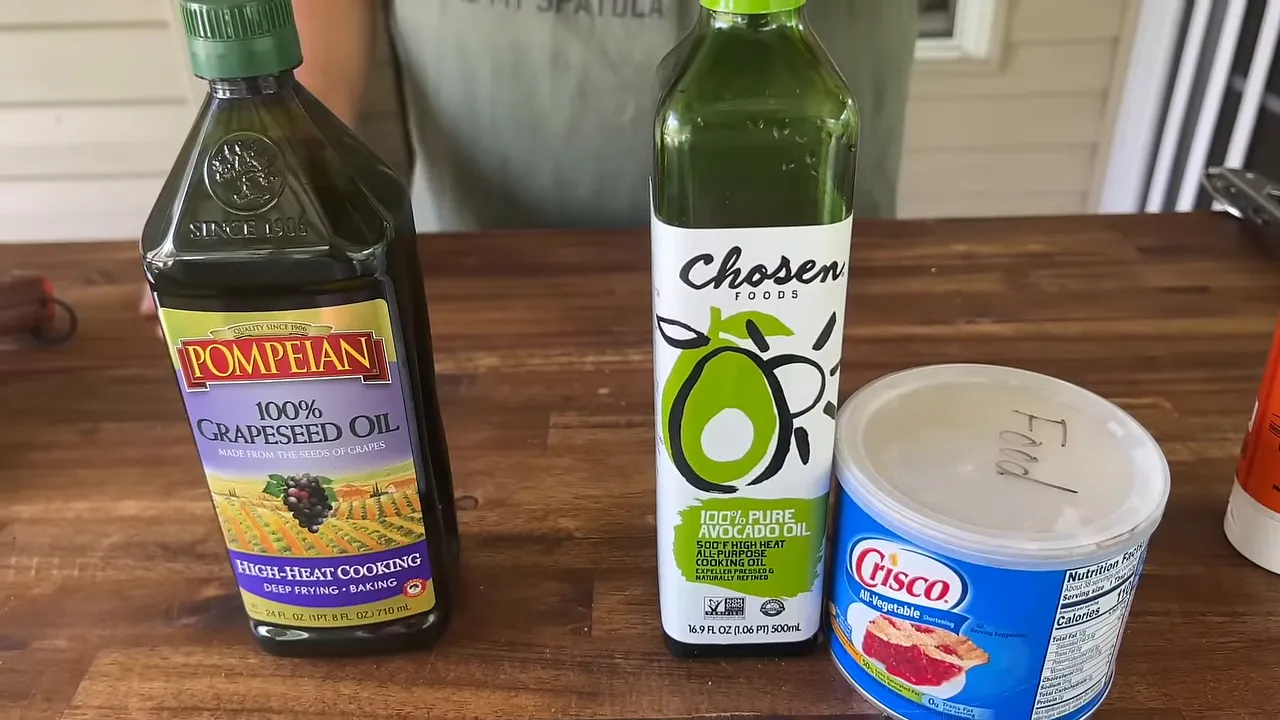
My preference for initial griddle seasoning is a neutral-flavored oil suited to high heat. I want something that works well for the base seasoning and that I can keep using when I cook.
These are the options I've had good results with:
- Grapeseed oil: My recent favorite. I've used it on several griddles with excellent results, and it's often less expensive than avocado oil.
- 100% pure avocado oil: Another oil I've used successfully. Check the label so you know you're buying pure avocado oil rather than a blend.
- Crisco shortening: Something we used a lot when we first started seasoning cast iron, and it did a good job.
Why I don't start with bacon grease
I don't recommend bacon grease, lard, or other animal fats for building that first base layer. That doesn't mean rendered fat has no place on a griddle. It absolutely does once you start cooking.
The distinction is between deliberately building your initial seasoning and letting cooking fats contribute to an established surface. Bacon grease can carry salt and food residue, and an outdoor griddle that sits unused between meals is a different situation from cast iron used several times every day.
Traditional methods developed around the fats people had available and how often they cooked. You don't have to treat those habits as the only possible way to care for a modern outdoor flat top.
What about flaxseed oil and specialty conditioners?
I stay away from flaxseed oil for this job. Its low smoke point doesn't fit the way I season an outdoor griddle, where temperatures can climb well beyond it. Unlike an oven set to a specific temperature, a griddle has hotter and cooler areas and can be harder to hold at a low, precise temperature.
For this process, I also choose grapeseed or pure avocado oil rather than olive oil.
As for dedicated griddle seasoning products, I'm not saying they're bad. I hadn't used the Traeger or Blackstone conditioners being discussed, so I wouldn't pretend to give a verdict on them. My preference is simply about value: if I'm spending money on oil, I like buying something that can season the griddle and cook dinner afterward.
3. Assuming the Whole Griddle Is Hot Enough
The burner setting is not the surface temperature. Turning every knob to high doesn't mean every inch of your griddle reaches the same heat.
The areas over the burners can be much hotter than the perimeter. Corners, edges, and sidewalls may stay lighter because they haven't reached enough heat to develop seasoning at the same rate as the center.
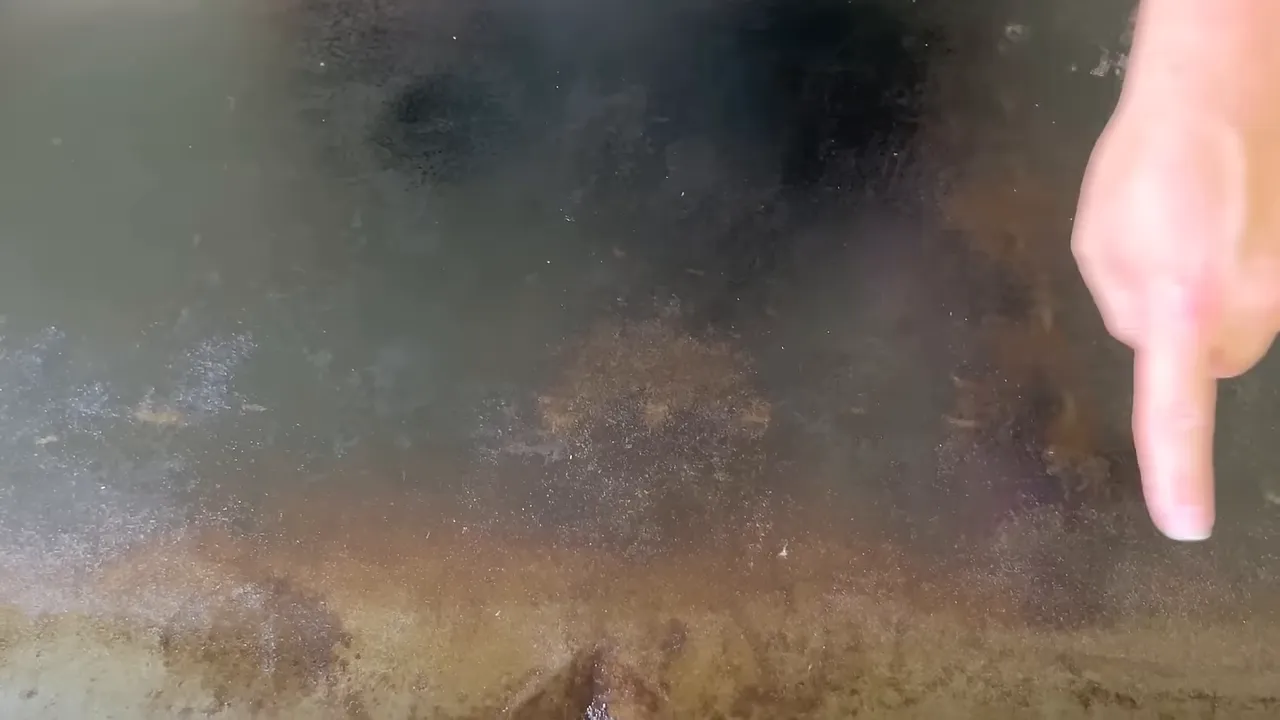
If the oil you're using needs high heat for your seasoning process, but the outer edge never gets there, pouring more oil onto that edge won't solve the temperature problem.
This is where an infrared thermometer earns its keep. Use it to compare:
- The cooking surface directly over each burner.
- The spaces between burners.
- The front and back edges.
- The corners and perimeter.
Early on, that thermometer teaches you a tremendous amount. As you learn your particular griddle, you'll start recognizing its temperature zones without checking nearly as often.
Don't diagnose seasoning by color alone. Look at where the color changes, how the oil behaves there, and whether that part of the surface is actually getting hot enough.
4. Adding Another Layer Before the Previous One Is Ready
Underseasoning isn't always about using too little oil. Often, it's about not giving the oil enough time.
Once you've wiped on a thin layer, let the griddle work. You'll see the oil smoke, and then that smoke will substantially settle down. There is a clear difference between smoke rolling off the surface and the quieter stage afterward.
If you keep applying fresh oil while the previous coat is still working through that process, you start stacking unfinished layers on top of one another.
A thin coat still needs time to cure. Thin doesn't mean instant.
Why your spatula leaves brown streaks
One of the problems I demonstrated was a surface that looked dark but hadn't developed a hard, durable seasoning layer. Passing a spatula over it left obvious light and brown streaks.
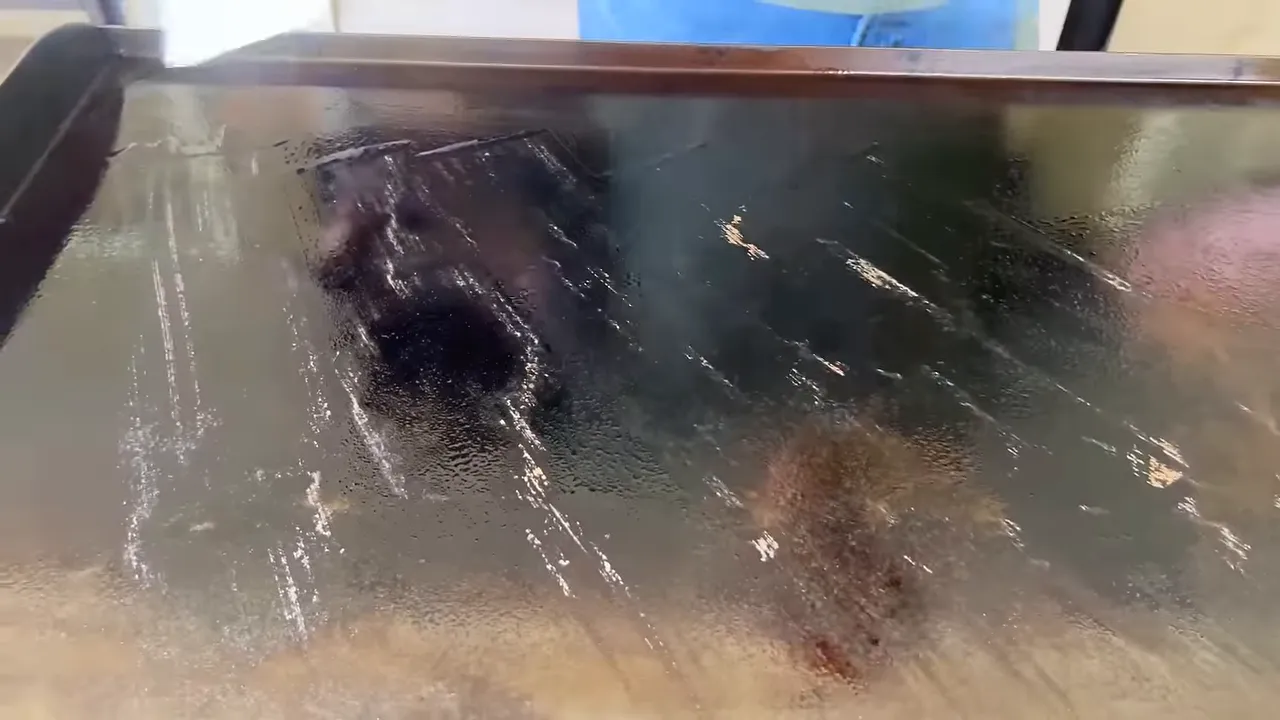
In that situation, the marks weren't proof that the griddle had suddenly rusted or that the top was destroyed. The oil layer simply hadn't finished forming the harder seasoning we wanted.
The first response shouldn't be panic or a complete strip to bare metal. Stop rushing the coats, manage any excess oil, and let the surface continue seasoning properly.
Why a griddle can be sticky without a huge pour of oil
Too much oil can cause stickiness, but so can adding reasonable amounts too quickly. If one layer hasn't cured before the next arrives, the result can still be a buildup of uncured oil.
Once the griddle is completely cool, tackiness or debris sticking to the surface can help you recognize that problem. Never test a hot cooking surface with your hand.
The important question isn't just, “How much oil did I pour?” It's also, “Did I let the last layer finish?”
5. Using Too Much Oil and Too Much Heat
This is probably the biggest trap: you see a dry-looking spot, so you add more oil. Then you see another one, so you add more again. Before long, you've got a shallow pool instead of a thin seasoning layer.
Spreading that pool around with a spatula doesn't necessarily make it thin enough.
You can have several seasoning problems at once
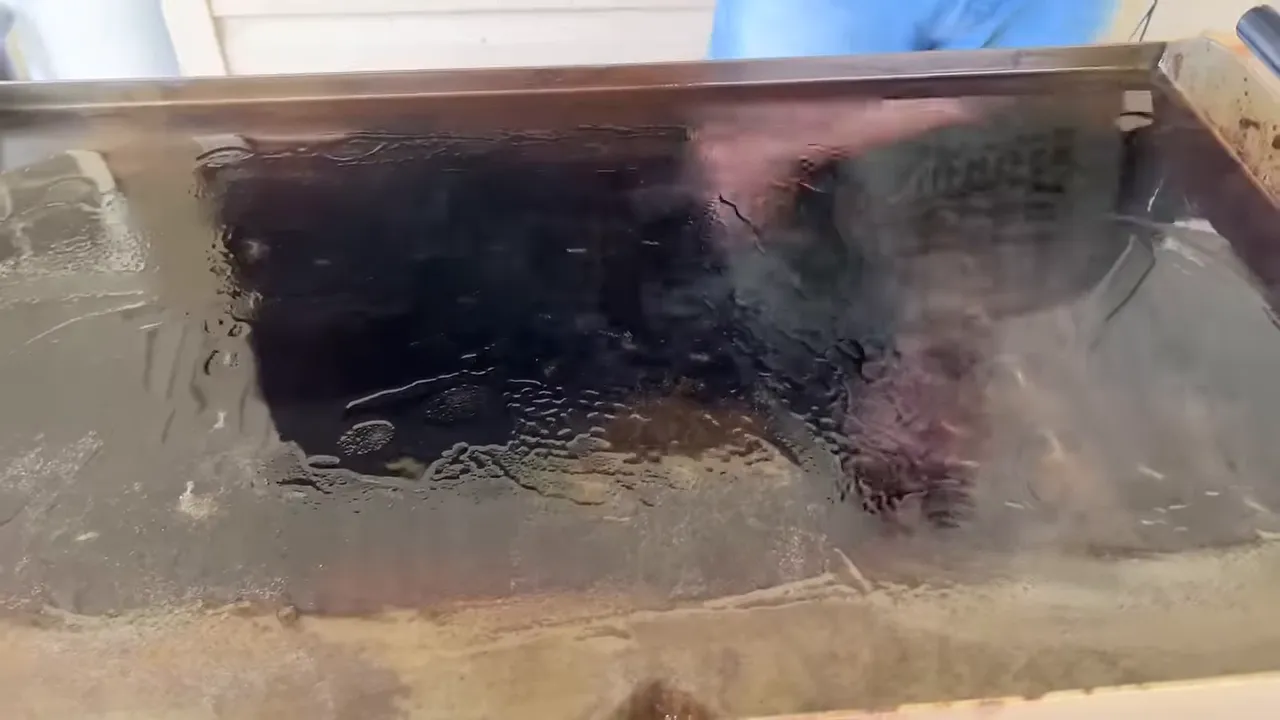
During the demonstration, oil began smoking and separating over the hotter burner zones while other areas stayed wet. Some spots were getting extremely hot before the rest of the top caught up.
That's how you can have an underheated perimeter, too much oil in cooler areas, and overheated patches all at the same time.
Don't assume that every pale or dry-looking area needs another pour. Check the heat and look at how much unused oil is already sitting elsewhere.
And no, the griddle doesn't automatically have to stay on high. It depends on the griddle. These surfaces can reach 450°F, 550°F, or even 600°F, which is why paying attention to actual temperature matters more than following a blanket burner-setting rule.
Redistribute the oil you already have
Use a suitable rag or paper towels held securely in long-handled tongs to pick up excess oil and spread an extremely thin film.
As you wipe, the towel collects oil. That means your next pass may not need any fresh oil from the bottle. There's often enough in the towel, plus unused oil around the edges, to coat the surface again.
- Wipe up the heavy areas rather than leaving them pooled.
- Redistribute existing oil across the surface in a very thin film.
- Monitor the hotter zones and manage the heat instead of repeatedly flooding them.
- Let the smoke substantially diminish before considering another coat.
- Add fresh oil only when you actually need it.
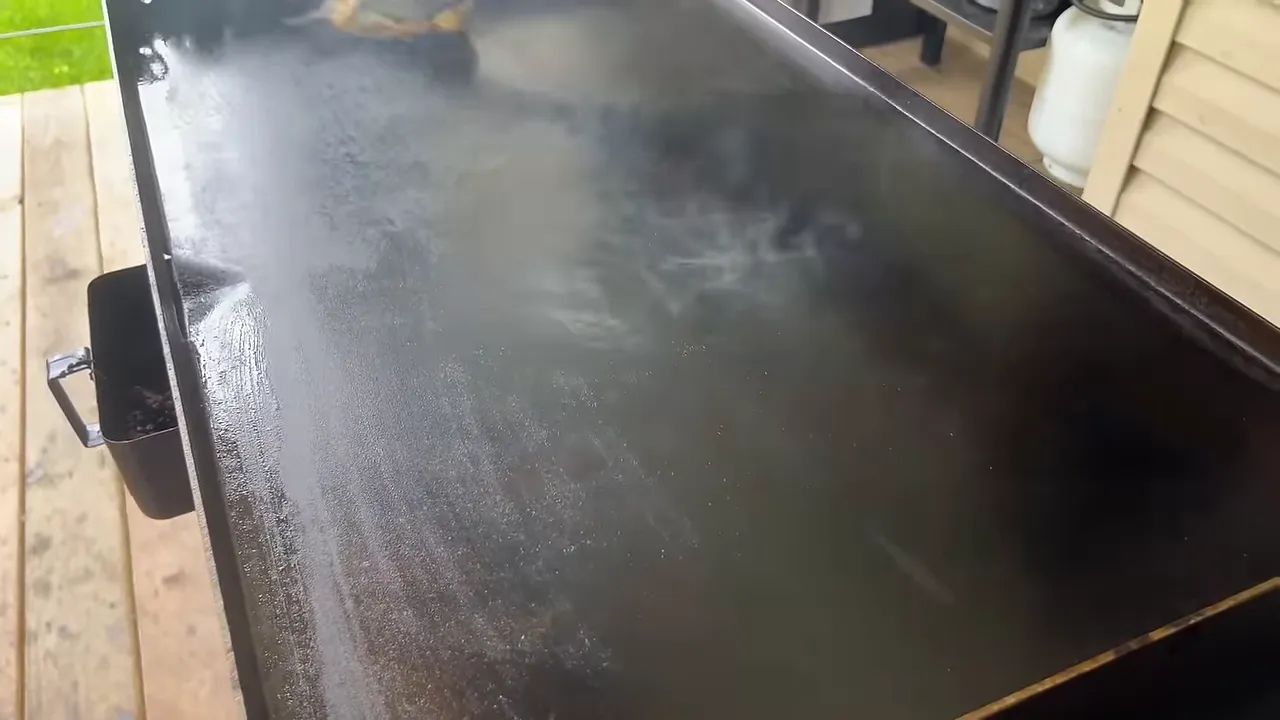
The finished seasoning layer should not be a wet pool. Leaving unused oil around the perimeter is a good way to end up with sticky edges later.
How to Fix Sticky or Uneven Griddle Seasoning
Most of these mistakes don't require taking the whole top back to bare metal. Start with the least aggressive correction that addresses the actual problem.
If the layer is thin but hasn't cured
Stop adding oil and allow the existing thin layer to finish seasoning at an appropriate surface temperature. Pay attention to the smoke settling down rather than trying to hurry through a predetermined number of coats.
If there's excess oil or gummy buildup
Scrape away the excess. Simply pouring another layer over it won't turn that buildup into a good foundation.
If scraping isn't enough to get the surface back to a workable condition, a griddle brick can help level out the problem areas. The goal isn't automatically to grind away every bit of seasoning. It's to remove the troublesome buildup so you can start applying thin, properly cured layers again.
Use the brick according to its instructions and be careful around hot steel. Wipe away the residue afterward. If needed, use a little water or soap during cleanup once it's safe to do so, then rinse, dry, and restart the seasoning process.
Here's the basic reset:
- Remove excess or poorly bonded material.
- Clean away the loosened residue and dry the surface.
- Bring the griddle to a suitable seasoning temperature while checking its different zones.
- Wipe on an extremely thin layer of your chosen oil.
- Allow that layer to finish before repeating.
Don't get so focused on making the top look perfect that you keep adding oil to fix every color variation. A sound cooking surface matters more than an immediately uniform black finish.
Use Tools That Keep Your Hands Away From the Heat
Seasoning involves a big piece of very hot steel and very hot oil. Tool choice matters.
I recommend long-handled tongs for holding the towel. Short-handled tools put your hand closer to both the surface and any oil that collects in the corners.
I've burned myself doing this, even though I knew better. Dragging a towel through a hot corner can bring oil right toward your fingers. Familiarity doesn't make that oil any cooler.
- Keep a secure grip on the towel with long tongs.
- Keep your hands clear of the steel, sidewalls, and pooled oil.
- Use heat-resistant gloves appropriate for the task if you need added protection.
- Never touch the surface to check its texture until it has fully cooled.
What to Cook First After Seasoning Your Griddle
Now for the fun part, which is the reason you bought the dang griddle in the first place.
Your first few meals can help maintain and develop the surface while teaching you how the griddle behaves. If you're new to flat top cooking, vegetables are a good place to start.
Start with vegetables you can move across the surface
Onions, zucchini, squash, raw potatoes, or cut asparagus give you a chance to practice moving food back and forth with the spatula. Cook them with enough oil to keep things moving without turning the surface into a pool.
As you move the vegetables, you're also distributing cooking oil. You're learning the sweeping motion, getting feedback from the surface, and helping maintain the seasoning through cooking.
My favorite first meal is a cheesesteak
I often choose some variation of a cheesesteak for a new griddle, and there's a reason behind it.
First, the onions and peppers let me spread oil across the top and feel how the surface is behaving. Are they moving easily? Are particular spots grabbing? That feedback tells me more than staring at the color.
Then I like a higher-fat beef, especially ribeye. The rendered beef fat contributes during the cook. This is where animal fats make sense in my routine: as part of cooking on the base seasoning I've already built.
Once the griddle has cooled afterward, I can also compare how slick the surface feels with how it felt before the meal.
Save acidic foods for later
For those early cooks, I stay away from tomatoes, tomato sauce, lemons, oranges, wine, and similar acidic ingredients. The new seasoning may not yet be ready for them.
My second cook is often a big breakfast. It gives me another chance to learn the hot spots, understand the temperature zones, and see whether an area needs more seasoning attention. Plus, who doesn't love breakfast on a griddle?
The big lesson is simple: clean first, use a suitable oil, keep the layers extremely thin, and give them time. Fix the excess instead of covering it up, learn your heat zones, and then get cooking. Seasoning doesn't stop developing when the initial process ends.


