If your griddle sits outside in the weather, my preference is a hard lid with a soft cover over it. If it lives under a covered porch and you cook on it often, a hard lid may be all you need. And silicone griddle mats? I’ve tried them, but I’m still not sold.
That’s the short answer. The more useful answer comes down to what each cover actually protects, what it leaves exposed, and how you use your flat top.
I get questions from people in Pennsylvania, Missouri, Florida, and everywhere else about protecting a griddle in their particular climate. Location matters, no doubt. But your state doesn’t tell the whole story. A griddle sitting out on wet grass has a different situation than one used regularly under a covered porch.
Before you buy a Blackstone griddle cover, or a cover for any other flat top grill, here are the three questions I’d work through.
Key Takeaways
- Soft covers block rain but can also trap moisture rising from beneath the griddle.
- Hard lids leave gaps, so inspect grease openings and exposed cups before outdoor storage.
- Silicone mats can leave edges vulnerable and collect debris on their oily undersides.
- Choose covers around your storage conditions, and inspect the griddle regularly between cooks.
1. Will a Soft Griddle Cover Keep All the Moisture Out?
When most people think about a grill cover, they picture the soft outer cover that slips over the whole unit. Does it do its job? Yes. It helps keep rain from landing directly on your equipment.
But here’s my concern: rain coming down is not the only source of moisture.
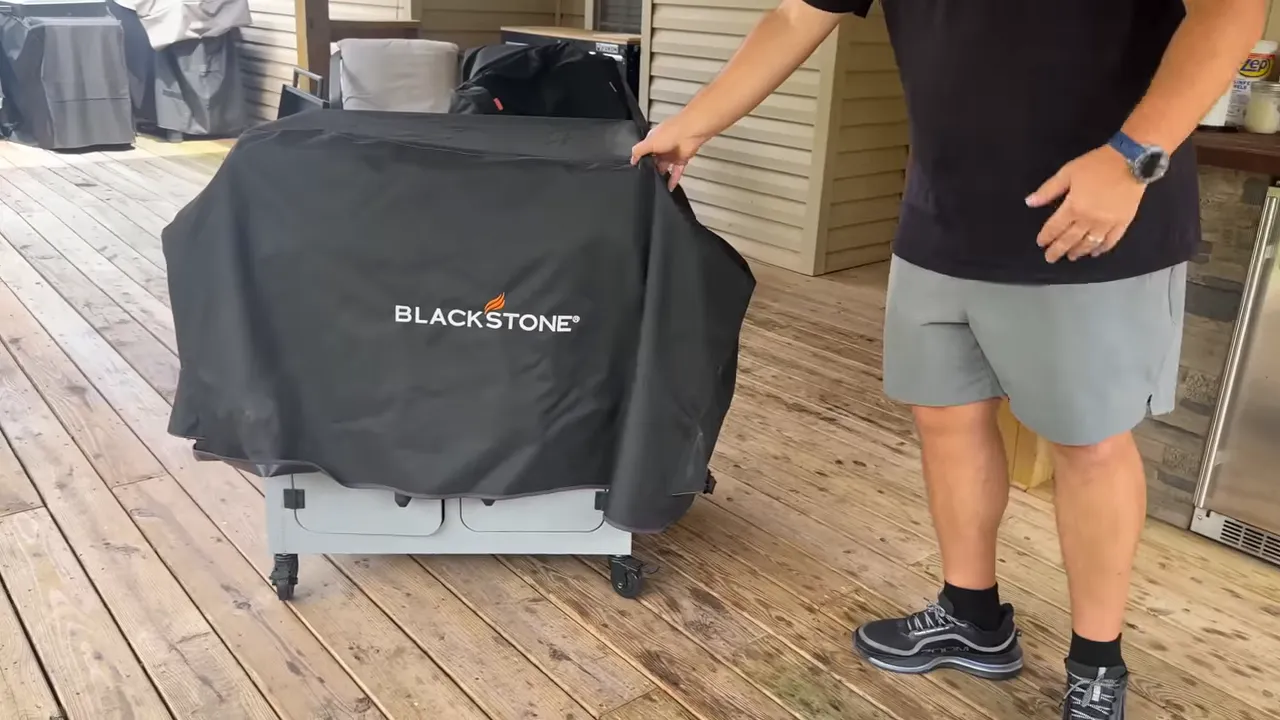
Think about what’s underneath your griddle
Where do you store your flat top?
- On grass?
- On gravel or stone?
- On a wooden deck?
- Under a covered porch?
Moisture can evaporate from those surfaces and move up beneath the cover. Even on my covered deck, water can run underneath, and the wood takes on moisture throughout the year.
A cover that sheds water from above can also make it harder for moisture underneath to escape, particularly if it doesn’t ventilate well. That leaves humidity around the very equipment you’re trying to protect.
That’s why I don’t look at a covered griddle and automatically assume it’s dry. Moisture is a major concern with steel cooking surfaces, and corrosion is the bigger issue we’re trying to avoid.
Your climate changes the problem, not the need for care
When I lived in Wyoming, rain wasn’t my main concern. Wind and dust were. Everything got dirty. Here in East Tennessee, humidity and pollen are part of the deal. A coastal setup can bring salt spray into the conversation, too.
So yes, consider the weather where you live. Just don’t stop at rainfall. Think about humidity, windblown dirt, the surface underneath the griddle, and whether the unit has any shelter.
Soft covers are replacement items
I have covers outside that are sun-faded. Some leak, some don’t. I haven’t found one brand, whether it’s the original manufacturer or an aftermarket option, that I can swear by for every situation.
These covers deal with sun, weather, and big temperature swings. I don’t expect them to last forever. Depending on the conditions, getting a couple of seasons out of one may be a reasonable result.
Buy a soft cover as weather protection, not as a lifetime guarantee against rust.
2. Does a Hard Cover or Hood Protect Everything?
A hard cover protects the cooking surface from above, but it doesn’t turn your griddle into a sealed box.
I sometimes remove lids to make cooking demonstrations easier to show. That is not because I think a griddle is better stored without one. A lid has a purpose. You just need to understand its limits.
Look for gaps and exposed openings
Every griddle model is a little different. On the Blackstone I’m using here, the hard cover sits over the cooking surface, but the rear grease opening is still exposed. The lid isn’t airtight, and it was never designed to be.
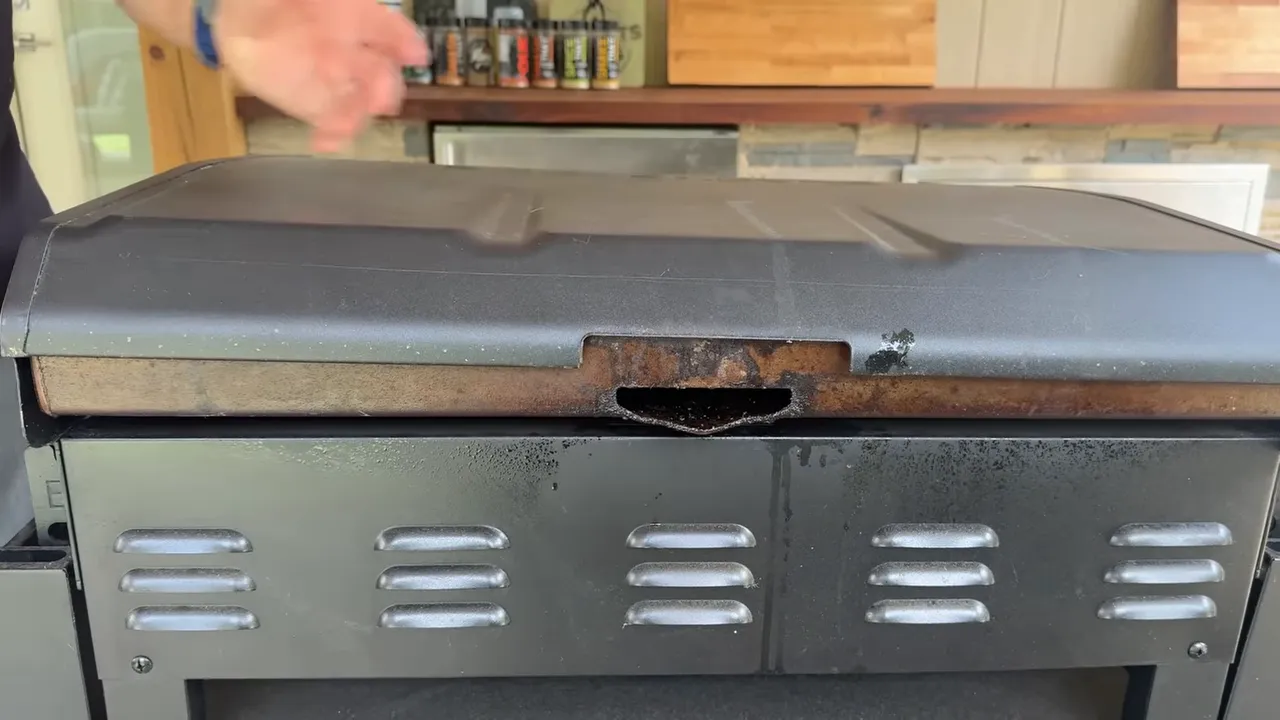
You can find openings on other designs, too. The stainless steel Solo griddle has visible holes around its upper body. A lid on top doesn’t mean humid air has no way inside.
The question isn’t simply, “Does it have a lid?” It’s, “What does that lid cover, and what remains exposed?”
Don’t forget the grease cup
This is an easy one to overlook, and I’ve done it myself. On some griddle designs, the grease cup can collect rainwater when left outside without adequate protection.
If there’s grease in the cup and water keeps filling it, the grease floats and can spill over. Now you’ve got a mess on your deck, stamped concrete, grass, or gravel. Leftover grease can also attract animals and mice.
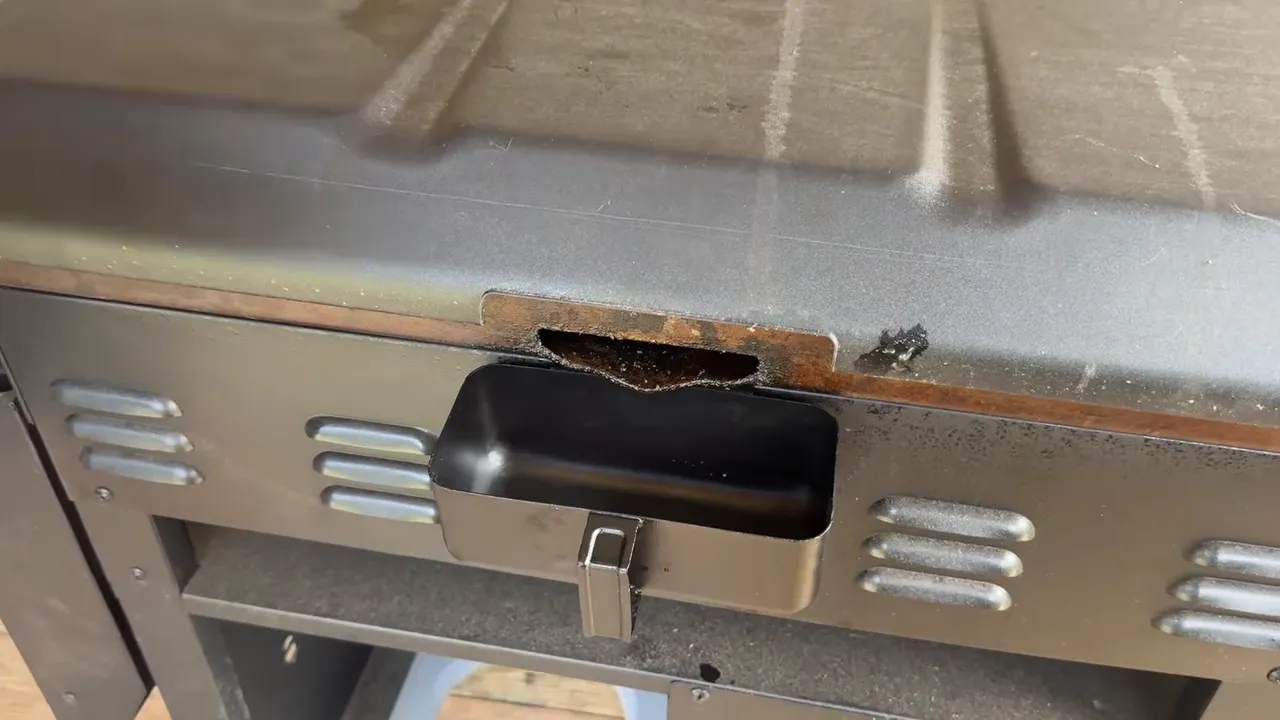
Empty and clean the grease cup rather than leaving it outside full of grease. If your setup leaves it exposed, removing it for storage avoids the rainwater problem altogether.
The cooking surface material matters, too
Cover choices are also part of the bigger conversation about which griddle to buy.
A stainless steel cooking surface is naturally more rust-resistant than a hot-rolled or cold-rolled steel surface. That doesn’t mean you can abuse stainless steel or skip cleaning it. But reduced concern about rust is one benefit worth weighing when you compare a higher-priced stainless griddle with a traditional steel flat top.
A rolled-steel surface needs seasoning and ongoing maintenance. The stainless surface I’m comparing it with is much lower maintenance in that respect. Those are different ownership experiences, even if both griddles have lids.
3. Is a Silicone Griddle Mat Worth Adding?
I’ve owned silicone griddle mats and tried different brands. For my setup, I don’t prefer them. That’s based on what happened when I used them, not because I think they do absolutely nothing.
They can keep moisture off most of the cooking surface. My concerns are the fit, the edges, and what happens to the mat after you take it off.
A mat needs to fit your specific griddle
Many of the silicone covers I’ve come across have been geared toward Blackstone griddles. Other options exist, including mats from Camp Chef, but availability hasn’t been equally broad across all the brands people use.
If you own a Weber, Member’s Mark, Nexgrill, Pit Boss, or another model, don’t assume a mat advertised for a different flat top will fit yours correctly. Check the actual model compatibility.
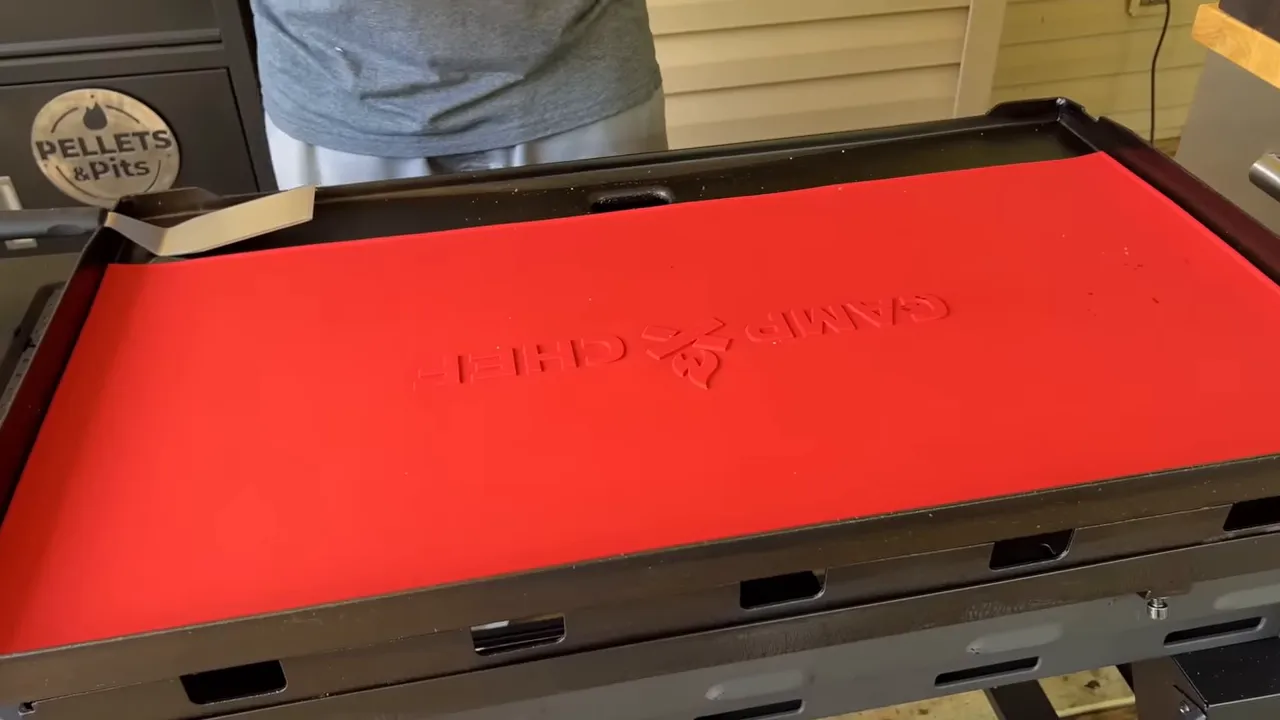
Protecting the center doesn’t solve the edges
When I relied on a silicone mat without another cover, I still found debris and moisture around the edges and in the cracks. When I lifted the mat, moisture could be underneath.
Did it protect most of the surface? Yes. But the exposed areas still mattered.
The sides and outer edges can be some of the hardest places to season well, especially when they don’t get as hot as the center. Those aren’t areas I want to ignore just because the middle looks protected.
The oily underside was the deal-breaker for me
I keep a thin protective coat of oil on my steel griddle between uses. Set a silicone mat on that surface, and the underside gets oily. It doesn’t have to absorb the oil for that to become a nuisance.
Then you remove the mat to cook. Where does it go? You might roll it, fold it, or set it to the side. That oily surface can collect pollen, dust, and dirt.
Here in East Tennessee, pollen gets all over everything. In Wyoming, it was windblown dust. Either way, I found that the mat could pick up debris and transfer it right back to a clean griddle.
That was my “I’m done with this” moment. I felt like I was adding another cleaning job instead of making maintenance easier. A silicone mat is not something I would rely on as complete outdoor weather protection.
What I’d Use for Different Storage Setups
There isn’t one cover combination I recommend to everybody. Here’s how I’d make the decision.
- Outside and exposed to weather year-round: I’d prefer a hard cover or hood, with a soft cover over the unit.
- Under a covered porch and used frequently: A hard lid may be enough. In a setup like mine, I don’t necessarily think a soft cover is needed.
- Stored for long stretches: Don’t put a cover on and forget about it for months. Check the cooking surface and maintain it.
- Considering a silicone mat: I’d skip it based on my experience with moisture at the edges and debris on the oily underside.
If you aren’t cooking regularly, I’d lift the lid and inspect the griddle about every three weeks to a month. Make sure the surface is in good shape instead of assuming the cover is handling everything.
Do You Need an Expensive, Name-Brand Griddle Cover?
A lot of my grills have matching manufacturer covers, but I’m not afraid to buy aftermarket. I’ve used aftermarket covers that seemed pretty good, and I don’t think the logo alone makes the decision.
In my experience, Weber covers have often been reasonably priced and done a good job. Some Traeger covers have been more expensive.
For example, when I checked, a cover for my Ironwood XL pellet grill was around $159, while several aftermarket options were around $40. Those are shopping examples, not fixed prices. But they illustrate the question: if covers eventually need replacing anyway, how much extra value are you getting from the more expensive one?
I’d weigh the price against the expected service life, rather than assuming the most expensive cover will last as long as the grill.
Built-in vents are worth a closer look
One feature caught my attention while researching Blackstone griddle covers: built-in air vents.
I found a cover listed at roughly $28 for a 28-inch griddle that advertised reinforced material and taped seams, along with ventilation. The vents were the part that interested me most because they might help moisture escape from underneath.
I hadn’t tested that cover, so I couldn’t say how well the ventilation worked. Still, it’s a feature I’d investigate rather than focusing only on how well a cover keeps rain out. Keeping water out and allowing trapped humidity to escape are both worth thinking about.
The Best Protection Is Paying Attention to Your Griddle
No matter which cover you choose, I believe using your griddle regularly is one of the best ways to take care of it. You’re cleaning it, maintaining the surface, and noticing small issues before they become big problems.
Leave a steel griddle untouched for nine months, and I can understand why lifting that lid might reveal a mess. A cover doesn’t replace maintenance.
Choose protection for your actual storage spot, keep up with the seasoning and light oil coating on a steel surface, empty the grease cup, and check underneath the lid. The goal isn’t to own every kind of griddle cover. It’s to keep your flat top in good shape and ready for the next cook.


