Weber calls the Slate a rust-resistant griddle. That sounds good, but I wanted to know what would happen if I cooked on it a handful of times, parked it, and left it alone for about three months.
The short answer: I did not see any rust on our 30-inch Weber Slate cooking surface. It needed a good cleaning, no question. But after sitting unused since roughly July 11, the top looked encouraging.
That result also brings up a couple of questions I hear all the time: Do you need to season a Weber Slate before cooking? And if it comes pre-seasoned, do you still need to oil it? Those are two different questions, and treating them as the same thing is where a lot of the confusion starts.
Key Takeaways
- Our Weber Slate showed no visible rust after about three months of unused outdoor storage.
- Initial seasoning is optional, but factory seasoning does not eliminate ongoing oiling and maintenance.
- Apply oil sparingly and assess seasoning needs after sticky foods or heavy scraping.
How I Tested the Weber Slate’s Rust Resistance
I seasoned the Slate, cooked on it four or five times to get a feel for it, and then stopped using it completely.
There was a reason for that. If I’m cooking on a griddle day after day and notice a problem, I’m going to address it. I’m not going to keep cooking while the surface deteriorates just to see how ugly it gets. Regular use would have meant regular maintenance, and that wasn’t the question I wanted to answer.
I wanted to see how this rust-resistant top handled sitting.
- The griddle stayed under our outdoor awning.
- I used the cover inconsistently, sometimes fully covering it and sometimes only partially covering it.
- Some days I opened the lid.
- I never turned it on during the storage period.
This was not a controlled laboratory test, and the griddle was not submerged in water. It was a real-world stretch of outdoor storage with changing cover conditions and no cooking.
Did the Weber Slate Rust While It Sat?
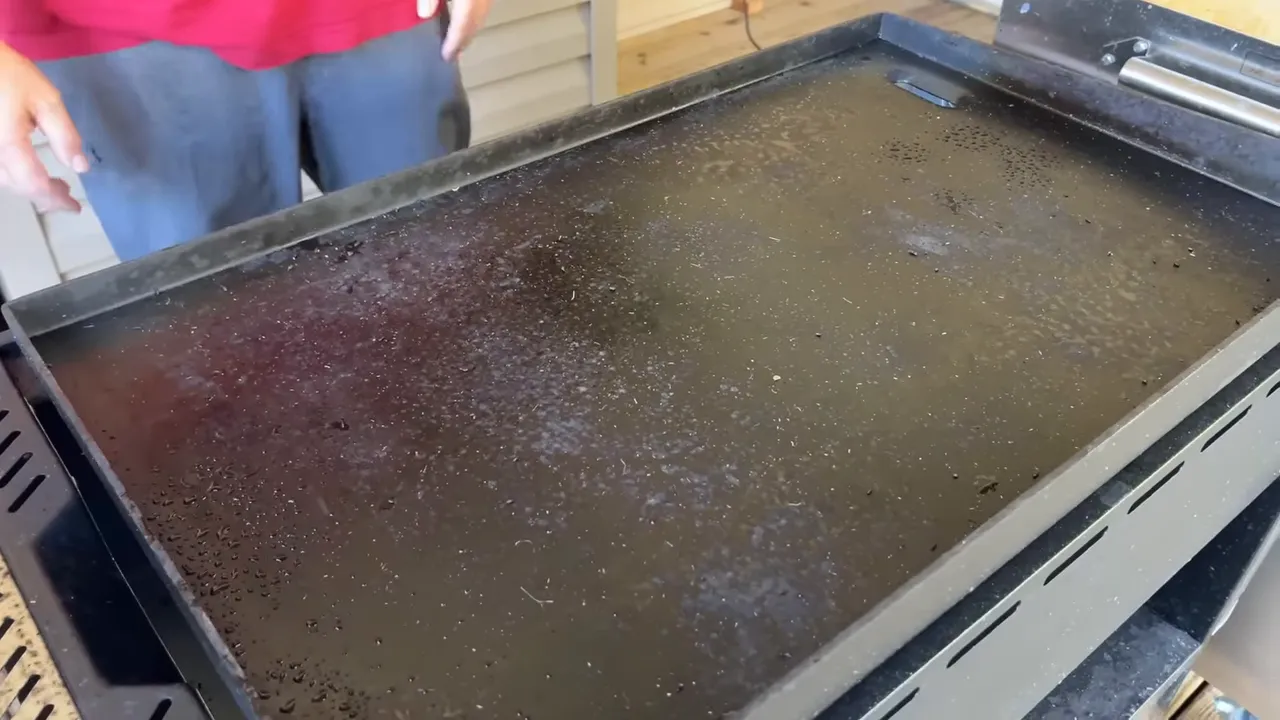
When I checked the cooking surface, I saw moisture, but no visible rust.
The water droplets need a little explanation. Our metal awning collects condensation when conditions are damp, and that moisture can drip down. The wet surface at inspection did not mean the griddle had been sitting underwater for three months.
For context, I also checked a Blackstone we had recently resurfaced. That griddle had already developed rust within roughly two weeks of the resurfacing work.
That is not a knock on Blackstone, and it is not a claim that every Blackstone will behave that way. It was simply a recent example here of a griddle being used and then sitting unused.
Our Traeger would not have been a useful comparison because I cook on it much more consistently. In my experience, griddles that get regular use tend to give me fewer rust problems than griddles that sit. Cooking usually brings cleaning, drying, and oiling along with it.
So the conclusion stays specific: our previously seasoned and lightly used Slate showed no visible rust after this particular three-month storage period. That is a good result, not permission to forget about maintenance.
Cleaning the Slate After Extended Storage
No rust did not mean the whole unit was ready for food. There was visible mold buildup on the stainless steel, and I treated the cooking surface as potentially affected, too. The base, shelves, and top all needed attention.
Because the cooking surface did not need rust removal, I saw no reason to jump straight to aggressive resurfacing. Here is the cleanup approach I used:
- Wash the dirty surfaces. I used soap and water, including Dawn Powerwash during the cleanup, to work through the buildup on the unit.
- Wipe everything clean. The shelves, body, and cooking surface all got cleaned rather than just making the top look presentable.
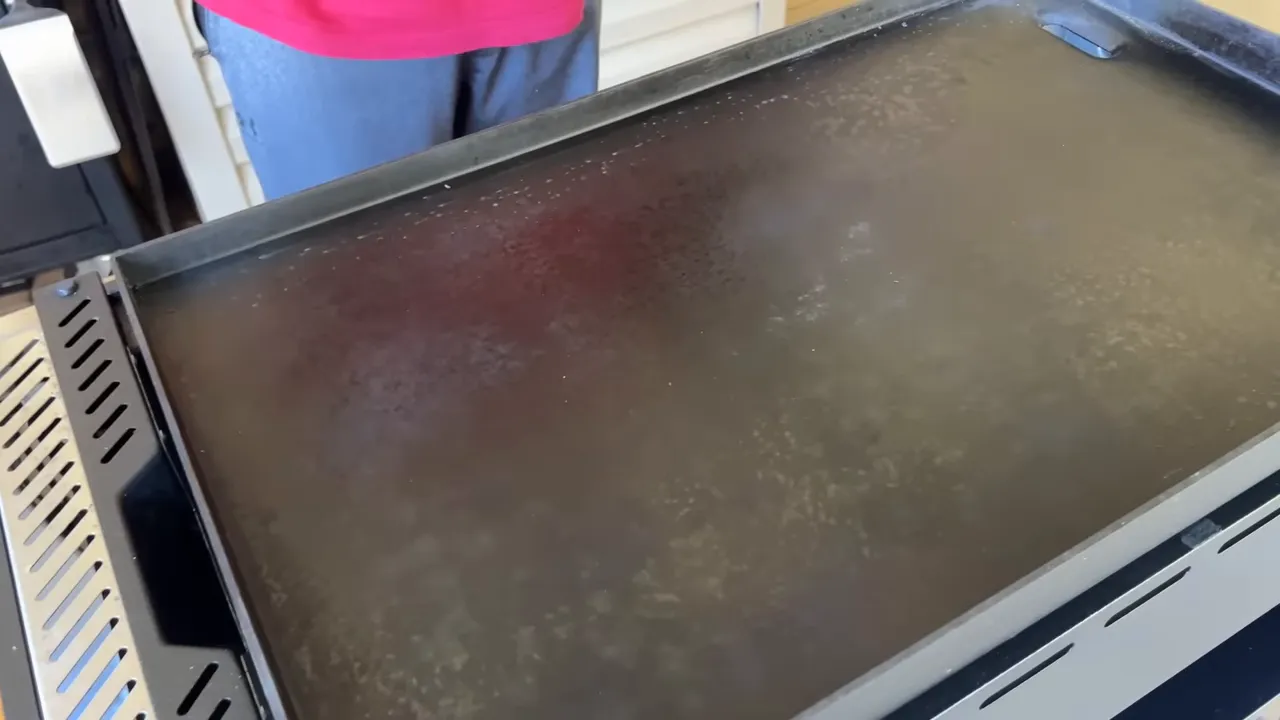
- Heat the cooking surface. After the initial cleaning, I turned the griddle on.
- Use water and steam for another cleaning pass. I worked across the heated surface and wiped it down.
- Dry the top completely. I left it without added oil briefly so I could inspect the cleaned surface.
That last step was an inspection point, not my recommended storage condition. I wanted to see the surface clean and dry before adding anything back to it.
Does a Pre-Seasoned Weber Slate Still Need Oil?
Yes. This is the maintenance point I feel strongest about.
I hear from people who say they never add oil because the Slate comes pre-seasoned. They clean it, wipe it dry, and leave it that way. People can have different routines and get good results, but I do not think deliberately abandoning oil is a good long-term strategy.
Pre-seasoned means the griddle starts with seasoning. It does not mean that seasoning never needs care.
Think about an old cast-iron skillet that has been cooked in a thousand times. Part of what makes that surface so good is the cooking and care it has received over the years. Fats from food and cooking oil help build and maintain seasoning as they heat and polymerize into a bonded layer.
You may not call an ordinary cooking session “seasoning,” but cooking can still contribute to that surface. That is different from saying oil is unnecessary.
Use a thin coating, not puddles
The Weber maintenance directions I checked recommend applying a small amount of neutral oil, such as vegetable or canola oil, after cleaning. Then spread it evenly across the cooking surface with paper towels and wipe up any excess pools.
I agree with that completely. For the instructions that apply to your particular unit, keep your owner’s guide handy or find it through Weber’s grill manual lookup.
In my experience, the Slate takes very little oil compared with a less-seasoned rolled-steel griddle. I think of it more like a Blackstone that already has a well-established seasoning layer: a little goes a long way.
If you leave too much oil behind, you can get beading rather than the thin, even coating you want. Spread a small amount across the whole surface, then wipe away the excess. More oil is not automatically better.
Should You Season a Weber Slate Before the First Cook?
The honest answer is that initial seasoning is optional.
Some owners have success cooking directly on the factory-seasoned surface. Others prefer to add seasoning before they cook. The argument gets unnecessarily heated when either side insists its approach is the only acceptable one.
The Weber manual I consulted explains that the surface is pre-seasoned with food-grade oil for rust protection, so an initial seasoning treatment is not required. It also provides instructions for adding another layer if you choose to do that.
That settles the practical question:
- You can cook without adding an initial seasoning layer.
- You can also choose to add seasoning using Weber’s instructions.
- Neither choice eliminates ongoing maintenance.
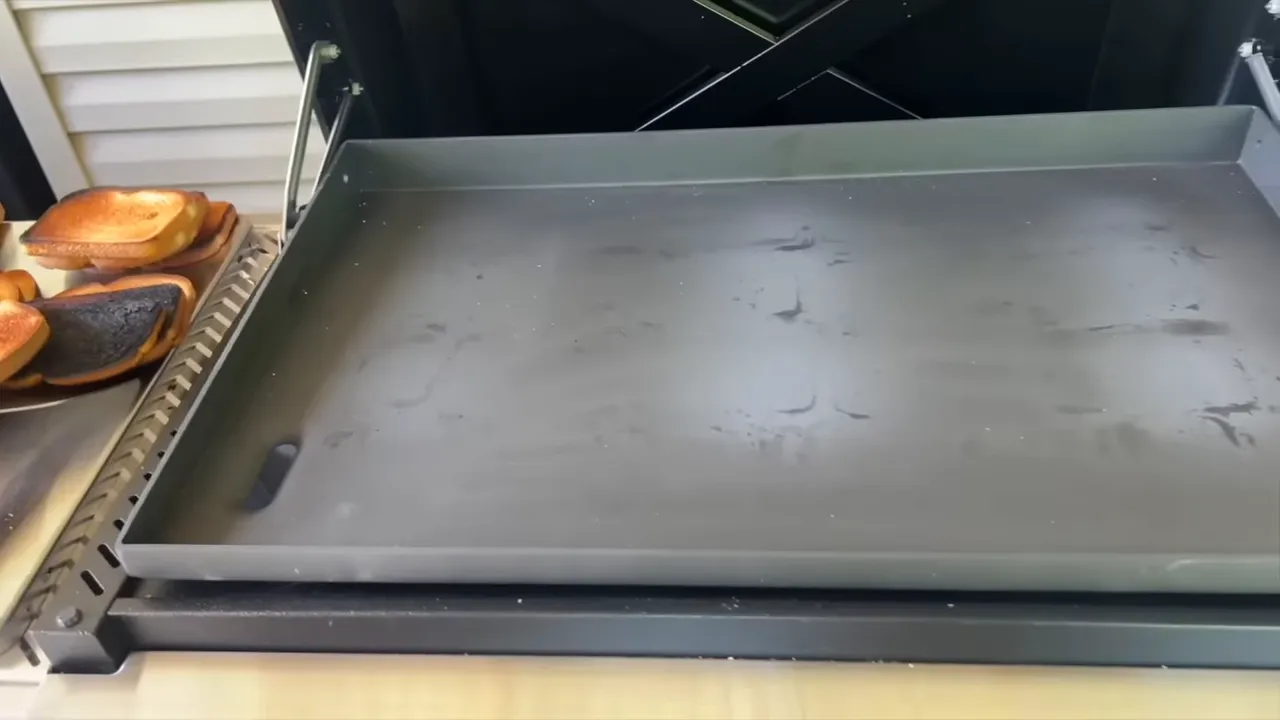
I chose to season mine. During an earlier extended heating session, we noticed pale or white-looking areas developing in the middle of the top. Based on my experience, I took that as a sign that the surface was getting dry in the hotter areas and needed attention.
That was my decision based on what I saw on my griddle. It does not mean every Slate owner must perform an initial seasoning session.
How Often Should You Re-Season the Slate?
The manual guidance I reviewed recommends scraping and seasoning every two to three cooking sessions to keep the surface in good condition. I agree with that as a maintenance guideline, but what you cook matters, too.
A gentle cooking session and a sticky, high-cleanup meal do not put the surface through the same thing.
Light cooking is easier on the seasoning
If I make scrambled eggs or a grilled cheese, the surface may need very little work afterward. I’m not necessarily dealing with a lot of burned-on residue or heavy scraping.
I still clean and maintain the top, but that cook may not call for the same seasoning attention as a tougher cleanup.
Sticky sauces and heavy scraping deserve a closer look
Now put down food with sticky sauces, let residue burn onto the top, and scrape hard to get everything off. That is a different situation. You may disturb some of the seasoning while removing the stuck-on food.
That is when I would pay closer attention to the surface and consider adding seasoning.
It is similar to how I think about frying oil. Oil used for a straightforward batch of frozen fries at around 350 to 375°F can be in a different condition from oil that has been through a much harsher cooking session. The work you put it through matters.
Use the two-to-three-cook guidance as a reminder to assess and maintain the surface, not as a reason to ignore its condition between those cooks.
My Bottom Line on the Weber Slate
The 30-inch Weber Slate is a darn good griddle. After about three months parked outside under our awning, with inconsistent cover use and no cooking, ours showed no visible rust. Once cleaned, it did not need a major surface restoration.
But the biggest lesson is not that maintenance no longer matters. It is that rust resistance and factory seasoning do not replace ongoing care.
Season it before the first cook if you want to, or use the factory-seasoned surface as intended. Either way, clean it, dry it, use a small amount of oil, and pay attention to what your cooking and cleanup are doing to the top.
After this cleanup, my plan was to add oil and give ours another two or three seasoning rounds before getting back to cooking. I would much rather keep up with the surface than let it deteriorate until I need a grill brick and a full restoration.
You spent your hard-earned money on that griddle. I want you to enjoy cooking on it, not dread fixing it.


